
Introduction
Haribo is one of the most recognizable candy brands in the world, famous for its colorful gummy bears and wide variety of chewy sweets. Loved by children and adults alike, its products are sold in supermarkets across continents. However, for Muslim consumers, a simple candy is not always so simple. Questions about ingredients, especially gelatin, raise an important concern: Is Haribo halal or haram?
This question is more complex than it may initially appear. The answer depends on several factors, including the source of ingredients, manufacturing practices, and whether a specific product has halal certification. In this article, we will explore everything you need to know—from ingredient breakdowns to scholarly opinions—so you can make an informed decision.
Understanding Halal and Haram in Food
Before diving into Haribo specifically, it’s essential to understand what halal and haram mean in the context of food.
Halal refers to anything permissible under Islamic law, while haram refers to what is forbidden. For food products, several key rules apply:
- Pork and its derivatives are strictly haram
- Alcohol and intoxicants are forbidden
- Animals must be slaughtered according to Islamic guidelines
- Cross-contamination with haram substances must be avoided
For processed foods like candy, the biggest concerns often revolve around hidden ingredients—particularly gelatin, flavorings, and colorings.
What Is Haribo Made Of?
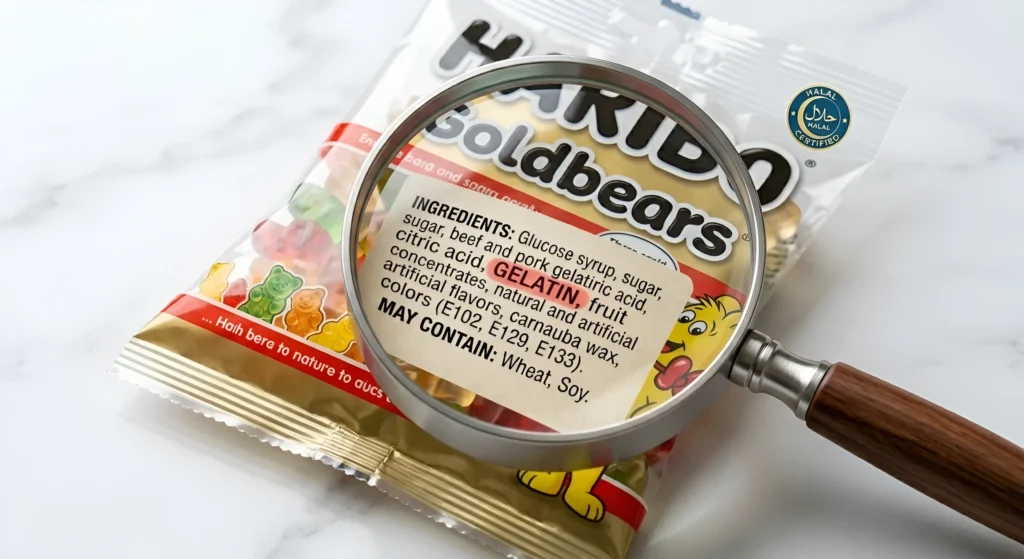
Haribo candies, especially gummy products, typically contain the following ingredients:
- Sugar
- Glucose syrup
- Gelatin
- Flavorings
- Colorings
- Citric acid
At first glance, most of these ingredients are halal. However, the critical ingredient that raises concern is gelatin.
The Gelatin Issue
Gelatin is a protein derived from animal collagen, commonly sourced from:
- Pork skin
- Beef bones and hides
- Fish
From an Islamic perspective, gelatin becomes problematic depending on its source:
- Pork-derived gelatin is always haram
- Beef-derived gelatin is halal only if the animal was slaughtered according to Islamic law
- Fish gelatin is generally considered halal
Most mainstream Haribo products use gelatin, and historically, much of it has been sourced from pork. This is the primary reason many scholars classify standard Haribo products as haram.
Related post : Is Sour Patch Halal or Haram?
Are All Haribo Products Haram?
The answer is not a simple yes or no. It depends on the specific product and where it is produced.
1. Standard Haribo Products
In many countries, Haribo gummies are made with pork-derived gelatin. These products are considered haram for Muslim consumption.
2. Halal-Certified Haribo Products
In some regions, Haribo produces halal-certified versions of its candies. These are made using:
- Halal-slaughtered beef gelatin
- Or plant-based alternatives
These products are clearly labeled and safe for Muslim consumers.
3. Vegetarian/Vegan Haribo Options
Some Haribo candies are made without gelatin and instead use:
- Pectin (derived from fruit)
- Starch-based gelling agents
These are generally halal, provided no alcohol-based flavorings are used.
Regional Differences Matter
One of the most important things to understand is that Haribo does not use the same recipe worldwide.
For example:
- In Europe, many products contain pork gelatin
- In Turkey, Haribo offers halal-certified versions
- In the UK, some products are vegetarian
- In Muslim-majority countries, halal options are more common
This means that the same Haribo product name might be halal in one country and haram in another.
How to Identify Halal Haribo
If you’re trying to determine whether a specific Haribo product is halal, here are some practical steps:
Check for Halal Certification
Look for an official halal logo on the packaging. This is the most reliable indicator.
Read the Ingredients
Avoid products that list “gelatin” without specifying its source.
Look for Vegetarian Labels
Products labeled as vegetarian or vegan are often gelatin-free.
Research the Country of Origin
Where the product is manufactured can significantly affect its halal status.
Related post : Are Gushers Halal?
What Do Islamic Scholars Say?
Islamic scholars generally agree on the following:
- Gelatin derived from pork is haram
- Gelatin from halal-slaughtered animals is permissible
- If the source of gelatin is unknown, it is better to avoid it
Some scholars debate whether the transformation process of gelatin (known as istihalah) changes its ruling. However, the majority opinion remains cautious, especially when pork is involved.
Common Misconceptions
“All Gummies Are Haram”
Not true. Gummies made with plant-based gelling agents are halal.
“All Haribo Is Haram”
Also incorrect. Some Haribo products are halal-certified.
“If It’s Sold in a Muslim Country, It Must Be Halal”
While often true, it’s still important to verify certification.
Halal Alternatives to Haribo
If you want to enjoy gummy candies without worry, there are many halal-certified or gelatin-free options available. Look for brands that clearly state:
- Halal certification
- Vegan or vegetarian ingredients
- No animal-derived gelatin
Fruit-based candies made with pectin are a great alternative and widely available.
Why This Matters for Muslim Consumers
Food is not just about taste—it’s about faith, ethics, and obedience to religious principles. Consuming halal food is an important part of Islamic practice, and being mindful of ingredients reflects a المسلم’s commitment to their beliefs.
In today’s globalized food industry, products often contain hidden ingredients, making awareness and education more important than ever.
Final Verdict: Is Haribo Halal or Haram?
Here’s a clear summary:
- Most standard Haribo products: Haram (due to pork gelatin)
- Halal-certified Haribo products: Halal
- Vegetarian/vegan Haribo products: Usually halal
The key takeaway is that you cannot generalize all Haribo products under one ruling. Each product must be evaluated individually.
Frequently Asked Questions
Is Haribo Goldbears halal?
In most countries, they are not halal due to pork gelatin. However, halal-certified versions exist in specific regions.
Does Haribo use pork gelatin?
Yes, many Haribo products use pork-derived gelatin unless otherwise stated.
Are Haribo halal in Pakistan?
Some imported products may be halal, but you must check for certification on the packaging.
Are vegan Haribo products halal?
Generally yes, as they do not contain animal-derived gelatin.
What should I do if I’m unsure?
Avoid the product and choose certified halal alternatives.
Conclusion
The question “Is Haribo halal or haram?” does not have a one-size-fits-all answer. While many of the brand’s popular gummies are not permissible due to pork-derived gelatin, there are halal-certified and vegetarian options available in certain markets.
As a Muslim consumer, the responsibility lies in checking labels, understanding ingredients, and making informed choices. When in doubt, it is always safer to avoid questionable products and opt for clearly halal alternatives.
By staying aware and cautious, you can continue to enjoy sweets without compromising your values.
