
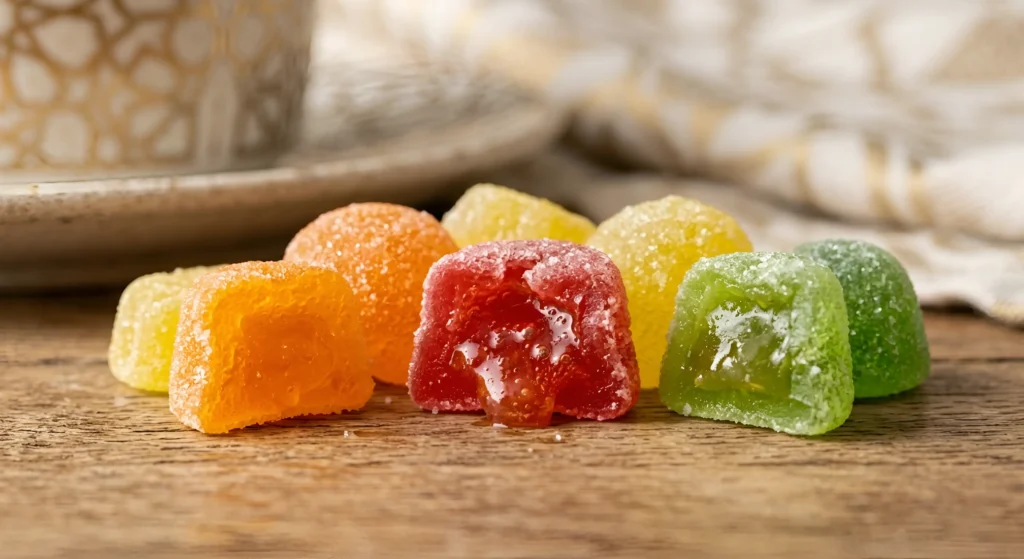
Are Gushers Halal? A Complete, Humanized Guide for Muslim Consumers
If you’ve ever bitten into a chewy, juice-filled candy and wondered, “Can I actually eat this as a Muslim?”—you’re not alone. One of the most commonly questioned snacks in this category is Gushers, the fruit-flavored, liquid-filled candy produced by General Mills.
At first glance, Gushers look harmless: colorful, fruity, and marketed toward kids. But when it comes to halal dietary laws, things get a bit more complicated. Ingredients, sourcing, and manufacturing processes all matter in determining whether a snack is halal or not.
In this detailed guide, we’ll break everything down in a simple, human-friendly way so you can confidently decide whether Gushers fit into your diet.
What Are Gushers?
Gushers are a popular chewy fruit snack introduced in the early 1990s. They are known for their unique texture—soft and chewy on the outside with a liquid, juice-like center that bursts when you bite into them.
They are manufactured by General Mills, a major American food company, and come in various flavors like:
- Strawberry Splash
- Tropical Flavors
- Sour Apple
- Mixed Berry
Because they are widely available and commonly consumed by children and adults alike, questions about their halal status come up frequently in Muslim communities worldwide.
Understanding What “Halal” Really Means
Before we analyze Gushers specifically, it’s important to understand what halal actually means.
In Islamic dietary law:
- Halal means “permissible” or “lawful”
- Haram means “forbidden”
- Food must not contain ingredients derived from pork
- Animal-derived ingredients must come from halal-slaughtered animals
- Alcohol or intoxicants are not allowed
- Cross-contamination should be avoided where possible
Even if a product looks vegetarian, hidden ingredients or processing methods can affect its halal status.
Ingredients in Gushers: The Key to the Answer
To determine whether Gushers are halal, we need to look closely at their ingredients. While ingredients can vary slightly by country, a typical U.S. version of Gushers includes:
- Corn syrup
- Sugar
- Pear puree concentrate
- Modified corn starch
- Maltodextrin
- Palm oil
- Citric acid
- Natural and artificial flavors
- Coloring agents (like Red 40, Blue 1, etc.)
Now here’s the important part:
Traditional U.S. Gushers do NOT contain gelatin, which is often the biggest concern in halal discussions.
Why Gelatin Matters
Gelatin is usually derived from:
- Pork (haram unless certified halal, which is rare)
- Beef (halal only if slaughtered according to Islamic law)
Many chewy candies use gelatin to create texture. However, Gushers typically use starch-based and plant-based gelling agents instead of gelatin, which is a positive sign for halal suitability.
Are Gushers Halal?
Here’s the honest answer:
In many cases: Gushers are considered halal-friendly
But not always officially certified halal
Let’s break it down further.
Why Many Scholars and Consumers Consider Them Halal:
- No gelatin in most standard formulations
- No direct pork-based ingredients listed
- No alcohol listed as an ingredient
- Plant-based thickening agents are used
Why Some People Still Avoid Them:
- No official halal certification in most countries
- “Natural flavors” can sometimes be vague (though usually plant-based or synthetic)
- Manufacturing facilities may handle non-halal products
- Ingredient variations exist by region
So the safest conclusion is:
Gushers are generally considered halal-permissible in ingredients, but not universally certified halal.
Related post : Halal Bites in the U.S. 2026
Regional Differences Matter More Than You Think
One of the biggest mistakes people make is assuming Gushers are the same everywhere.
United States
Most U.S.-made Gushers do not contain gelatin and are often considered halal-friendly by ingredient analysis.
Middle East / Malaysia / Indonesia
In some regions, imported snacks are reviewed more strictly, and halal certification is often required. If a product does not carry a recognized halal logo, it may be avoided.
Europe
Ingredients can differ slightly, and labeling regulations may vary. Some versions may include different additives or colorings.
This means you should never assume, even if the name is the same.
The Hidden Ingredient Concern: “Natural Flavors”
One of the most confusing ingredients in many processed foods is “natural flavors.”
This term can include:
- Plant extracts
- Fruit essences
- Occasionally animal-derived compounds (rare in snacks like Gushers)
In the case of Gushers, there is no strong evidence suggesting animal-derived enzymes are used, but because companies do not fully disclose flavor sources, uncertainty remains.
For strict halal observers, this is one reason to be cautious.
Food Colorings: Are They Halal?
Gushers contain artificial colors such as:
- Red 40
- Blue 1
- Yellow 5
These are synthetic dyes derived from petroleum sources, not animals.
From a halal perspective:
- Generally considered permissible
- Some individuals avoid them due to health concerns, not halal concerns
So food coloring is not the issue here.
Cross-Contamination: Should You Worry?
Another consideration is manufacturing practices.
Gushers are produced in large industrial facilities that may also process:
- Gelatin-based candies
- Other non-halal snacks
While cross-contamination is usually minimal, strict halal consumers may prefer certified products to avoid any doubt.
What Do Islamic Scholars Say?
There is no single universal ruling specifically about Gushers. Instead, scholars typically apply general principles:
- If no haram ingredients are present → generally permissible
- If uncertainty exists → avoid if you want strict compliance
- If certified halal → safest option
Many modern fatwa councils emphasize checking labels rather than banning entire product categories.
How to Check If Your Gushers Are Halal
If you want to be 100% sure, follow this checklist:
1. Read the Ingredients Label
Look for:
- Gelatin (avoid if present)
- Alcohol-based flavorings
- Animal-derived emulsifiers
2. Check for Halal Certification
Look for logos from:
- IFANCA
- Halal Food Authority
- HMC (Halal Monitoring Committee)
3. Check Your Country Version
Don’t assume imported products are identical.
4. Contact the Manufacturer
Companies like General Mills sometimes provide ingredient clarification upon request.
Are Gushers Vegan? (Helpful Insight)
Interestingly, many versions of Gushers are also considered vegan-friendly because they do not contain animal-derived gelatin.
However:
- Not all vegan foods are automatically halal
- And not all halal foods are vegan
Still, vegan status is often a helpful indicator.
Related post : Is Naya Halal or Haram?
Health vs Halal: A Quick Note
Even if Gushers are considered halal-friendly, it’s worth remembering they are:
- High in sugar
- Artificially flavored
- Highly processed
So moderation is key—not just for religious reasons, but for overall health.
Halal Alternatives to Gushers
If you want to avoid doubt entirely, here are some halal-friendly alternatives:
- Fruit leather made from real fruit
- Homemade gummy snacks using agar-agar
- Certified halal gummy candies (available in Middle Eastern stores)
- Dried fruit snacks
These options provide similar taste satisfaction with clearer halal assurance.
Frequently Asked Questions (FAQ)
Do Gushers contain pork gelatin?
Most standard Gushers do not contain gelatin at all, making pork gelatin not a concern in many versions.
Are Gushers halal in the USA?
They are generally considered halal-friendly by ingredients, but not officially certified halal.
Are Gushers haram?
Not inherently. However, lack of certification and ingredient uncertainty may make some Muslims avoid them.
Can Muslims eat Gushers?
Yes, many Muslims do, especially if they verify ingredients and avoid gelatin-free concerns.
Are all fruit snacks halal?
No. Some contain gelatin or alcohol-based flavoring, so each product must be checked individually.
Final Verdict: Are Gushers Halal?
After breaking everything down, here’s the most accurate conclusion:
Gushers are generally halal-friendly based on ingredients in many regions.
However, they are not universally certified halal, which creates uncertainty for strict observance.
Simple takeaway:
- If you follow a lenient halal approach → likely acceptable
- If you require strict certification → better to avoid or verify first
Final Thoughts
Food decisions in Islam often come down to awareness and intention. Gushers sit in a “gray area” where ingredients don’t clearly indicate haram substances, but certification is missing.
So instead of a simple yes or no, the real answer is:
It depends on how strictly you follow halal guidelines—and whether you are comfortable with ingredient-based assurance rather than certification.
