
Introduction
Pop-Tarts are one of the most popular ready-to-eat snacks in the world. Known for their convenience, sweet flavors, and long shelf life, they have become a go-to breakfast or snack option for millions of people. However, for Muslim consumers, the question is not just about taste or convenience—it is about whether these products are permissible according to Islamic dietary laws.
The question “Are Pop-Tarts halal?” is more complex than it might seem. It involves understanding ingredients, processing methods, and the possibility of cross-contamination. Many packaged foods contain hidden components that may not be immediately obvious, making it essential for Muslims to be cautious and informed.
Understanding Halal in Food
Before diving into Pop-Tarts specifically, it is important to understand what “halal” means in the context of food.
In Islam, halal refers to anything that is permissible. When it comes to food, this includes:
- No pork or pork-derived ingredients
- No alcohol or intoxicants
- Meat must be slaughtered according to Islamic guidelines
- Ingredients must be free from contamination with non-halal substances
In processed foods, the challenge often lies in hidden ingredients such as emulsifiers, flavorings, enzymes, and colorings. These components may be derived from animal or plant sources, and without clear labeling, it becomes difficult to determine their halal status.
What Are Pop-Tarts Made Of?
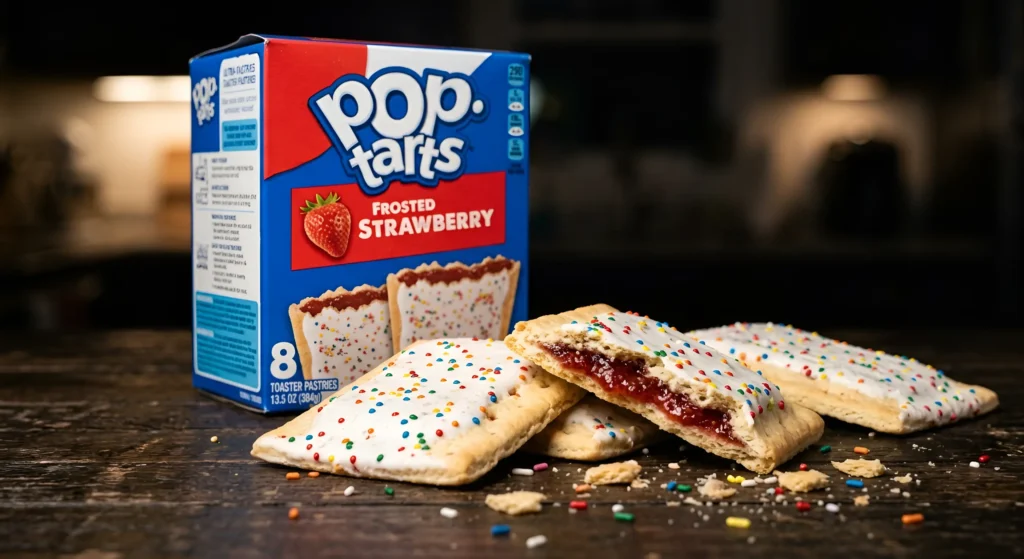
Pop-Tarts are a type of toaster pastry consisting of a thin pastry crust filled with sweet fillings such as fruit jam, chocolate, or cream. Many varieties are also topped with frosting and sprinkles.
Common ingredients found in Pop-Tarts include:
- Enriched flour
- Sugar
- Vegetable oils
- Corn syrup
- Gelatin (in some varieties)
- Mono- and diglycerides
- Artificial and natural flavors
- Color additives
At first glance, many of these ingredients seem harmless. However, the concern lies in how some of them are sourced and processed.
Key Ingredients That Raise Halal Concerns
Gelatin
Gelatin is one of the biggest concerns for Muslim consumers. It is typically derived from animal collagen, often sourced from pigs or non-halal slaughtered animals.
If a Pop-Tart variety contains gelatin and it is not certified halal, then it is generally considered haram.
Mono- and Diglycerides
These are emulsifiers used to improve texture and shelf life. They can be derived from either plant or animal fats.
- Plant-based sources = Halal
- Animal-based sources (non-halal) = Haram
The problem is that packaging rarely specifies the source, making it a gray area.
Natural and Artificial Flavors
The term “natural flavors” can be misleading. These flavors may sometimes contain alcohol as a solvent or may be derived from animal sources.
Without certification, it is difficult to verify their halal status.
Color Additives
Some food colorings are derived from insects or contain alcohol-based solvents. While not all are problematic, they still raise concerns for strict halal observers.
Related post : Is Jollibee Halal or Haram?
Are All Pop-Tarts Haram?
The answer is not a simple yes or no.
Some Pop-Tarts may be closer to halal than others depending on their ingredient list. For example:
- Frosted varieties are more likely to contain gelatin or questionable additives
- Unfrosted fruit flavors may have fewer problematic ingredients
However, the lack of halal certification means that even seemingly safe options cannot be guaranteed as halal.
Cross-Contamination Concerns
Even if a specific Pop-Tart flavor does not contain explicitly haram ingredients, there is still the issue of cross-contamination.
Manufacturers often produce multiple products in the same facility. This means that equipment used for non-halal items may also be used for Pop-Tarts.
For many Muslims, especially those who follow stricter interpretations, this possibility makes uncertified products doubtful (mashbooh) and therefore better avoided.
Halal Certification: Why It Matters
Halal certification provides assurance that a product has been thoroughly reviewed and complies with Islamic dietary laws.
When a product is halal-certified:
- Ingredients are verified
- Processing methods are checked
- Cross-contamination risks are minimized
Unfortunately, most Pop-Tarts are not halal-certified, which leaves consumers relying on ingredient analysis rather than clear approval.
Different Opinions Among Scholars
It is worth noting that there are varying opinions among Islamic scholars regarding processed foods.
Strict View
Some scholars advise avoiding any product that contains doubtful ingredients or lacks halal certification.
Lenient View
Others may allow products if:
- No clearly haram ingredients are listed
- The questionable components are likely plant-based
Because of these differing opinions, the decision often comes down to personal level of comfort and religious adherence.
Related post : Feastables Halal or Haram?
Safer Alternatives to Pop-Tarts
If you are unsure about Pop-Tarts, there are several alternatives that can give you peace of mind.
Halal-Certified Pastries
Look for brands that clearly display halal certification on their packaging. These products are specifically designed to meet Islamic dietary requirements.
Homemade Toaster Pastries
Making your own version at home is one of the safest options. You can control every ingredient and ensure everything is halal.
Basic ingredients include:
- Flour
- Butter or halal margarine
- Fruit jam
- Sugar
Homemade pastries can be just as delicious and even healthier.
Natural Snack Options
Instead of processed pastries, consider:
- Fresh fruits
- Whole grain toast with honey
- Yogurt with granola
These options are not only halal but also more nutritious.
How to Check If a Product Is Halal
When evaluating packaged foods like Pop-Tarts, here are some practical steps:
- Read the ingredient list carefully
- Look for halal certification symbols
- Research unfamiliar ingredients
- Contact the manufacturer if necessary
- Consult reliable halal food guides
Being proactive can help you make informed decisions and avoid uncertainty.
Common Misconceptions
“If it doesn’t contain pork, it’s halal”
This is not entirely true. Halal rules go beyond pork and include proper sourcing and processing of all ingredients.
“Vegetarian products are always halal”
Not necessarily. Vegetarian foods can still contain alcohol-based flavorings or non-halal additives.
“Small amounts don’t matter”
In Islamic dietary law, even small amounts of haram substances can make a product impermissible.
The Role of Awareness in Modern Diets
In today’s global food industry, many products are highly processed and contain complex ingredient lists. This makes it more important than ever for Muslim consumers to stay informed.
Understanding labels, asking questions, and choosing certified products are all part of maintaining a halal lifestyle in a modern world.
Final Verdict: Are Pop-Tarts Halal?
Pop-Tarts cannot be universally classified as halal.
- Some varieties may not contain clearly haram ingredients
- Others include gelatin or questionable additives
- Most are not halal-certified
- Cross-contamination is a possibility
Because of these factors, many Muslims choose to avoid Pop-Tarts altogether or only consume them if they are confident about the ingredients.
Conclusion
The question “Are Pop-Tarts halal?” highlights a broader issue faced by many Muslim consumers today—the challenge of navigating processed foods.
While Pop-Tarts are convenient and popular, their ingredient complexity and lack of halal certification make them a doubtful choice for those who strictly follow Islamic dietary laws.
Ultimately, the best approach is to stay informed, read labels carefully, and when in doubt, choose alternatives that provide certainty and peace of mind.
Making conscious food choices is not just about following rules—it is about aligning your lifestyle with your values. And in that sense, even small decisions, like choosing a snack, can have meaningful significance.
