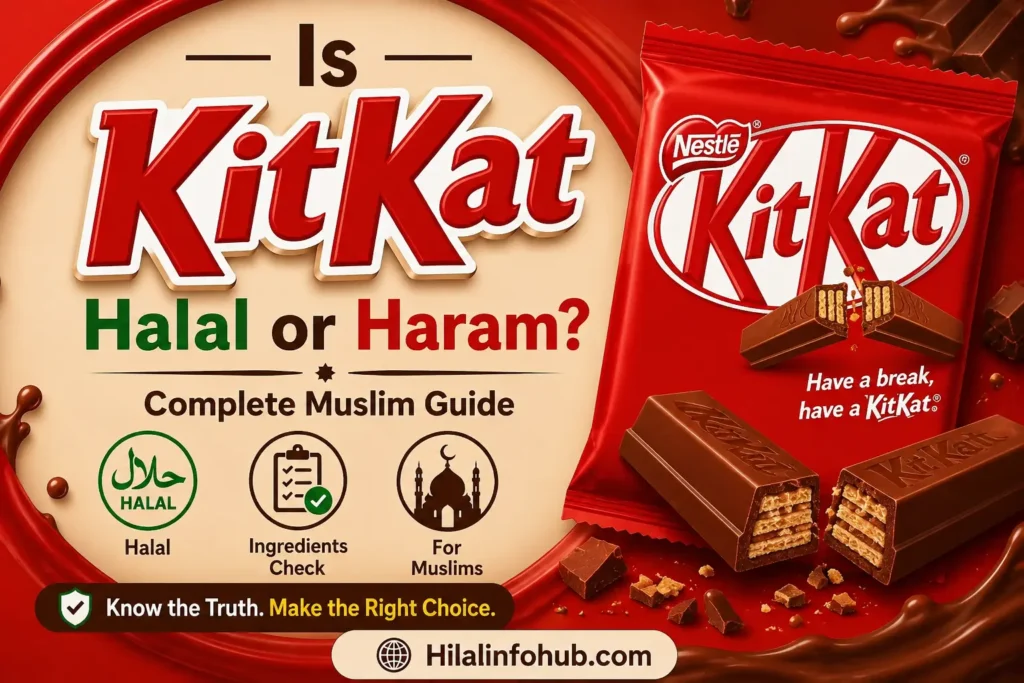
Is KitKat halal? The simple answer is that it depends on where you are. While many KitKat bars are considered halal-friendly because they don’t contain meat products, the presence of certain ingredients like whey or animal-derived fats can vary by country.
Short answer: KitKats are usually halal, but regional certifications matter.
Quick Answer:
- KitKat = Generally Halal (Region Dependent)
- Gelatin = Not present
- Pork ingredients = Not present
- Certification = Available in Muslim-majority countries
- Overall = Halal-friendly, but check the label for “Whey” sources
KitKat is a world-famous wafer bar covered in chocolate. Because it is a chocolate-based snack rather than a gummy candy, it doesn’t use gelatin. However, Muslims often worry about the source of whey powder and emulsifiers used in the chocolate.
In this article, you will learn everything in simple English. We will explain KitKat ingredients, halal status, and how to identify a safe bar.
What Does Halal Mean in Islam?
Halal means “permissible” or “allowed” in Islam. For a chocolate snack to be halal:
- It must not contain alcohol or liquor-based fillings.
- Any animal-derived ingredients (like whey or emulsifiers) must come from halal-slaughtered animals or plant sources.
- It must be free from cross-contamination with haram products.
Is KitKat Halal for Muslims?
Yes, KitKats are generally halal.
The main reasons are:
- No Gelatin: Unlike chewy candies, KitKat uses wafers and chocolate.
- Vegetarian-Friendly: In many countries (like the UK and India), KitKats are suitable for vegetarians.
- Halal Certification: In countries like Malaysia, UAE, and Pakistan, KitKats are officially Halal Certified.
Ingredient Analysis of KitKat
| Ingredient | Source | Halal Status | Notes |
| Sugar | Plant | Halal | Safe |
| Wheat Flour | Plant | Halal | Safe |
| Cocoa Butter | Plant | Halal | Safe |
| Milk Solids | Animal | Halal | From cow’s milk |
| Whey Powder | Animal | Doubtful | Depends on the enzyme used |
| Lecithin | Plant/Soy | Halal | Usually soy-based |
Additional Information About KitKat Ingredients
KitKat ke ingredients chocolate aur wafer par mushtamil hote hain. Sabse bada concern Whey Powder ka hota hai. Whey cheese banane ke process se nikalta hai, aur agar cheese banane mein animal rennet (stomach enzyme) use hua ho, to kuch scholars usay doubtful maante hain.
Lekin, Nestlé aksar plant-based emulsifiers use karta hai. Islamic principle ke mutabiq, agar label par “Suitable for Vegetarians” likha hai, to woh aksar halal consider kiya jata hai.
Related post : Is Twix Halal or Haram? Complete Muslim Guide 2026
Potential Concerns to Consider
- Whey Source: If the whey is processed with non-halal animal enzymes, it becomes Mashbooh (doubtful).
- Cross-Contamination: In factories that produce various snacks, there is a tiny risk of contact with non-halal items.
- Seasonal Flavors: Some special edition KitKats (like those from Japan) might contain alcohol or different ingredients.
Is KitKat Halal in Different Countries?
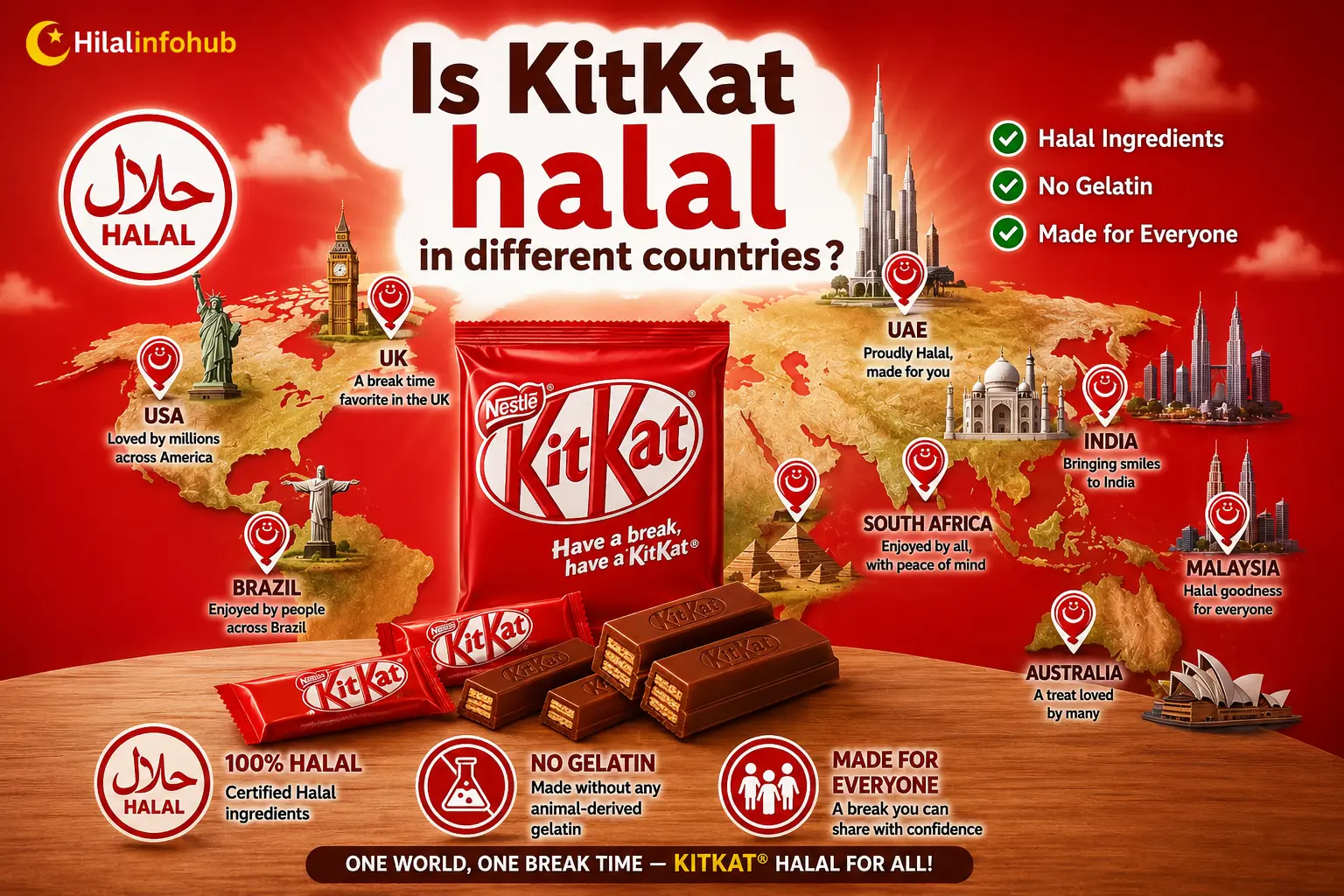
- Middle East (UAE, Saudi, etc.): 100% Halal Certified.
- Malaysia/Pakistan: 100% Halal Certified.
- United Kingdom: Most are “Suitable for Vegetarians,” making them generally halal-friendly.
- USA: Generally halal, but not officially certified.
- Japan: Caution! Some flavors (like Sake flavor) contain alcohol and are Haram.
Global Halal Map: Where is KitKat Safe?
Manufacturing standards vary significantly by geography. Multi-national corporations like Nestlé adapt their inventory and ingredients based on local culture and modest fashion or dietary trends (Hassan).
| Region | Status | Reason |
| Middle East | Certified Halal | Strict government oversight; all meat/dairy derivatives are verified. |
| Malaysia / SE Asia | Certified Halal | Nestlé Malaysia is a global leader in Halal production (Singh et al., 2021). |
| United Kingdom | Halal-Friendly | Labeled “Suitable for Vegetarians,” meaning no animal rennet is used. |
| United States | Halal-Friendly | Produced by Hershey’s under license; no gelatin or pork fats are used. |
| Japan | Use Caution | Home to 300+ flavors; many contain alcohol or non-halal additives. |
Executive Summary: The Quick Verdict
If you are looking for a fast answer, here is the status of KitKat as of 2026:
- Halal Certified: KitKats produced in Muslim-majority countries (e.g., Malaysia, UAE, Pakistan, Indonesia) are 100% Halal Certified and safe to consume (Singh et al., 2021).
- Vegetarian Approved: In the UK and parts of Europe, most KitKats are labeled “Suitable for Vegetarians,” which generally satisfies the requirements for many Muslims as they contain no meat-based rennet.
- Doubtful (Mashbooh): Special seasonal editions, particularly from Japan (e.g., Sake flavor), may contain alcohol and are therefore Haram.
- USA Status: Not officially certified, but generally considered halal-friendly due to the absence of animal fats.
Real-Life Scenario: What Should You Do?
If you are at a shop and want to buy KitKat, you can say:
- Check for the Halal Logo: Especially if you are in a Muslim country.
- Look for the Vegetarian Sign: A green dot or “Suitable for Vegetarians” text is a good sign.
- Avoid Alcohol Flavors: Stay away from exotic flavors that mention liquor or wine.
Related post : Is Swedish Fish Halal or Haram? Complete Muslim Guide 2026
Scientific and Islamic Jurisprudence (Fiqh)
In Islamic jurisprudence, the rule of thumb is Al-Aslu fil-Ashya’ al-Ibahah—the origin of all things is permissibility unless proven otherwise.
Since KitKat does not contain:
- Pork (Khinzir)
- Blood
- Alcohol (in standard versions)
- Gelatin (which is common in other candies)
It remains within the “Halal” or “Halal-friendly” category for the vast majority of Islamic scholars.
How to Verify for Yourself
In an era of “ultra-processed” foods, being a conscious consumer is vital (Czifra). Follow these steps before buying:
- Scan for the Logo: Look for JAKIM (Malaysia), MUIS (Singapore), or HMC (UK) logos.
- Check for “Vegetarian”: If no halal logo is present, a “V” or vegetarian label usually confirms the absence of animal-based enzymes in the whey.
- Read the “E-Numbers”: Use a Halal App to scan codes like E471 to ensure they are from plant sources.
Better Alternatives for Muslims
If you are in a region where ingredients are unclear:
- Halal-Certified local chocolates
- Vegan Chocolate bars (These never use animal-derived whey)
- Dark Chocolate (Usually has fewer animal-derived ingredients)
Explore More Halal & Haram Food Guides.
- Is Twizzlers Halal or Haram? Complete Muslim Guide 2026
- Is Airheads Halal or Haram? Complete Muslim Guide 2026
- Is Perdue Chicken Halal? Full 2026 Guide
- Are Nerds Gummy Clusters Halal? Complete 2026 Guide
FAQs
Is KitKat halal in the USA?
Yes, they are generally considered halal-friendly as they don’t use meat products, but they aren’t officially certified.
Does KitKat contain pig fat?
No, KitKat does not contain pork or pig fat.
Is there alcohol in KitKat?
Standard KitKats are alcohol-free. However, some Japanese versions (like Sake flavor) do contain alcohol.
Is the whey in KitKat halal?
In certified regions, yes. In other regions, it is usually vegetarian-sourced.
Final Verdict
KitKat = Generally Halal
Concern = Japanese/Special Flavors
Recommendation = Look for “Suitable for Vegetarians” or Halal Logo.
Conclusion
As of 2026, KitKat remains one of the safest global chocolate brands for Muslims. Due to Nestlé’s commitment to “Standardisation and Adaptation”—adjusting their engine of production to meet local environmental and cultural regulations—they have made KitKat accessible to the Ummah worldwide (Hassan).
While the standard milk chocolate bar is globally safe, the responsibility lies with the consumer to be extra cautious with imported “exotic” flavors that may deviate from these halal standards
kitKats are generally considered halal because they are free from gelatin and pork products. Their primary ingredients—cocoa, milk, and wheat—are permissible. While the source of whey can sometimes be a point of discussion among strict observers, most Muslims consume KitKats safely, especially those marked as vegetarian-friendly. Always double-check the label for “liquor” in special editions!
