
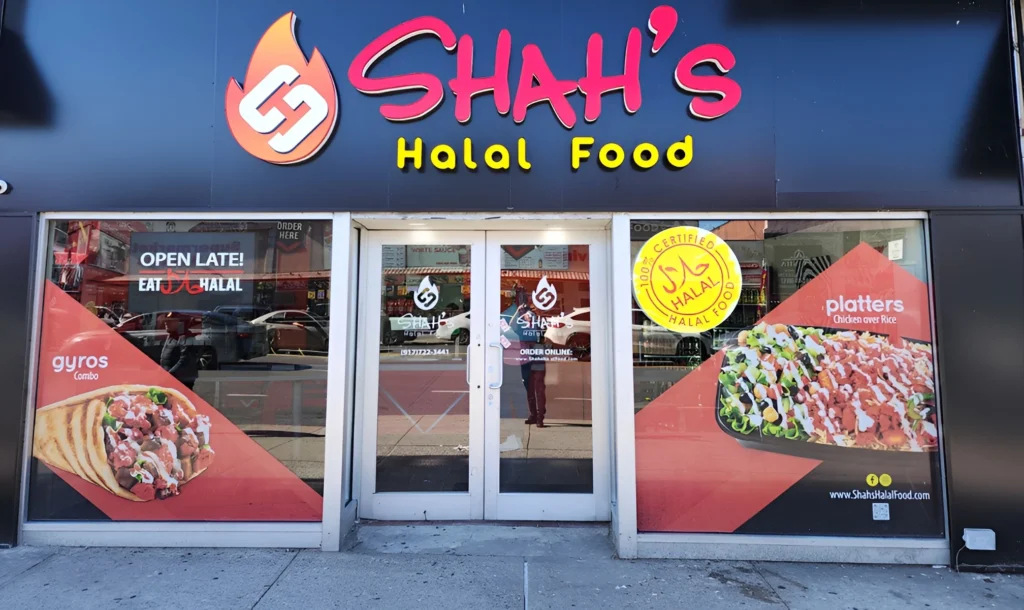
Shah’s Halal Food: A Thorough In-Depth Analysis
Introduction
In the global halal street-food and casual-dining market, Shah’s Halal Food stands out as a serious contender. Established in 2005 as a humble food cart in Queens, New York, the company has expanded to become a chain of restaurants, food-trucks and events-catering businesses in the United States and overseas.
This piece delves into the beginnings, menu, growth, brand personality, popularity, issues, and why Shah’s Halal Food is an interesting topic within the halal-casual dining sector.
Origins & Early Days
Shah’s Halal Food has its beginnings in 2005, when founder Shafiq “Shah” Mashriqi (or “Shah” for short) had a food cart in Richmond Hill, Queens, NY (121st & Liberty Avenue) serving halal-certified street-food.
From such humble beginnings, the brand grew. In 2016 the first store opened (on Long Island), and the company started to roll out into several outlets and formats.
The narrative traces the traditional “street cart to restaurant chain” path: begin small, perfect a signature menu, establish a loyal following locally, and then expand. It’s also rooted in the Muslim-halal food sector, which is seeing increasing demand in the U.S. and abroad.
Brand & Halal Certification
One of the key pillars of Shah’s Halal Food is its commitment to “100% certified halal” food. According to their website, all food is prepared in a USDA-approved facility and every dish claims halal certification.
This certification matters: to many Muslim diners (and others looking for halal choices) it indicates confidence that the meat and ingredients conform to Islamic dietary regulations (zabiha, etc). That confidence is frequently a competitive edge in the halal dining market.
Menu Review
Platters
Amongst Shah’s favorite bestsellers are the platters like:
- Chicken Over Rice
- Lamb Over Rice
- Combo Over Rice (chicken + lamb)
Wraps, Gyros & Pitas
They also offer gyros and pitas: chicken gyro, lamb gyro with tzatziki sauce, onions, tomatoes.
Vegetarian/Meat-Free Options
Although meat platters take center stage, Shah’s does have listed vegetarian options (falafel on rice) for the sake of non-meat consumers.
Signature Sauces
An elemental aspect of Shah’s experience is their sauces—white sauce, green sauce, hot sauce. Those sauces are frequently the flavour profile and are the key to the “halal cart” style popularity. Shah’s even retails their white sauce.
Customisation & Extras
Shah’s focuses on a build-your-own format: choose your protein, your base (rice, salad, chips), sauces and add extra toppings.
What Sets Shah’s Apart
A number of aspects stand Shah’s apart from other casual food concepts that are halal:
- Halal Certification & Scale: The company is presented as entirely halal-certified and scaled up strongly (100+ outlets based on their website).
- Signature Sauce Culture: The sauces (particularly the white sauce) form a part of the company culture — identifiable and reproducible.
- Cart Origins & Street-Food Vibe: Having begun as a food cart in Queens provides it street-food origins, which provide legitimacy and a bit of legend to the brand.
- Menu Simplicity & Execution: Having a few signature items (rice platters, gyros, wraps) on the menu instead of attempting to serve too wide a range of cuisine allows for reasonable consistency.
- Expansion & Accessibility: Having a presence in several locations throughout states and even overseas (Canada, UK) opens the brand up to a broader market.
Expansion & Growth
From a solitary cart in 2005, Shah’s Halal Food has become a multi-state (and global) operation:
- More than 120 locations on their website.
- New York, New Jersey, Connecticut, Massachusetts, Pennsylvania, Delaware, Virginia, California (and other locations) are mentioned.
- Global expansion: there is a UK branch and a Canadian branch as part of worldwide aspiration.
- Franchise: The company has franchising to grow further.
The growth indicates a shift from a local-only business to a national (and global) brand. With it comes advantages (brand recognition, economies of scale) and disadvantages (consistency, brand identity weakening, local authenticity).
Customer Experience & Popular Appeal
Shah’s Halal Food’s popularity is based on a number of experiential elements:
- Value For Money: Most customers mention generous portions at relatively affordable prices. For instance, a lamb or chicken platter for approximately US $12-13 at a city outlet.
- Sauces & Flavour: The mix of sauces and fresh grilled meat served on rice is at the heart of the appeal.
- Halal Certification: For Muslim patrons looking for halal, the certified nature is a major attraction.
- Convenient & Casual: Most places are fast-casual, convenient, and have a street-food vibe (particularly original cart sites).
- Customisation: Letting customers add more toppings, deciding on rice or salad or fries/chips provides customers with choices.
- Community Vibe: Some customer feedback (such as Reddit discussions) cite the welcoming employees, the late-night hours of operation, and neighborhood atmosphere. For instance:
“Shah’s. If you go at the right times they load you up, and no matter what time they’re really nice.”
Brand Identity & Signature Items
Shah’s Halal Food has established certain “signature” aspects:
The Chicken/Lamb Over Rice Platter
This is perhaps the crown jewel: grilled marinated meat on rice, salad, sauces. Simple yet powerful.
Sauces (White, Green, Hot)
The white sauce in particular has become a mini-brand in itself — now retail-sold. This provides the brand with an merchandise footprint outside of the restaurant.
Street-Food Roots/Cart Origins
The fact that the business began from a food cart adds to the brand’s story.
Halal Certification
Highlighting the use of halal-certified meat and preparation is an important identifying factor.
Customisable Combos
Enabling customers to choose protein + base + toppings + sauces provides the brand with flexibility but also consistency across outlets.
Location & Format Differences
Shah’s has the following formats of operation:
- Food Vendors and Trucks: A reflection of the beginning and still utilized for campus events, festivals, campus food-truck circuits.
- Mortar & Brick Restaurants: Fast-casual or full-service restaurants in malls, downtown sites, commercial strips.
- Franchise Outlets: The company provides franchisee opportunities for individuals to open their own stores with the Shah’s name.
- Catering and Events: School event catering, wedding catering, corporate lunches.
Challenges & Criticisms
Like any rapidly expanding food brand, Shah’s Halal Food has its fair share of challenges:
- Authenticity vs Standardisation: Expansion from a cart to 100+ sites can threaten loss of flavour, service or local authenticity. Some customers say that some sites are not as “street-food authentic” as the original. For instance:
“I attempted Shah’s place in Boston. I like Eat it Halal cart …”
- Portion & Pricing Variation: Since locations vary in rent/labor costs, portions or prices might change and some longtime enthusiasts point out variations.
- Menu Depth: Some critics sense the menu is shallow compared to smaller standalone halal places that have more offerings (e.g., biryani, complete Pakistani/ Afghan food).
- Franchise Consistency: Ensuring consistent quality among numerous franchisees is a typical restaurant business challenge.
- Local Competition: There are often dozens of halal restaurants and carts vying for business in most areas; differentiation will take more than simple menu duplication.
Market & Cultural Significance
Shah’s Halal Food occupies the crossroads of multiple cultural and market tendencies:
- Growing Demand for Halal Foods: With the growing population of Muslims in the U.S. and the growing awareness of halal eating even among non-Muslim consumers, fully-certified brands become a focus.
- Street-Food Into Chain Trend: Most street-food ideas (food carts/trucks) have grown into fast-casual chains (e.g., the original The Halal Guys). Shah’s is part of that narrative.
- Immigrant Entrepreneur Stories: The immigrant entrepreneur story of the founder (Afghan origins) and creating a business in a cart in Queens resonates with the entrepreneurial mytho-narrative typically celebrated in U.S. food culture. The media report on the opening in New Haven CT highlighted it.
- Hybrid Casual Dining: Shah’s sits in the hybrid space of fast-casual, where quick service, personalization, youth demographic appeal are possible while maintaining a focus on quality and halal certification.
New Haven Location Case Study
A good example is the newest Shah’s Halal Food store opening at 286 York Street, New Haven, Connecticut (within The Shops at Yale). Reporting by the press stated:
- The brand highlighted the “flavors of Afghanistan” as a part of its identity.
- The launch featured a ribbon-cutting ceremony with complimentary food and community engagement.
- It was selected due to its student base (Yale University) and ethnically diverse community.
- Local government officials said Shah’s offers “great price points for both Yale students and our residents.”
This example illustrates how Shah’s identifies strategic markets, prioritizes community integration, and constructs a brand narrative on authenticity and value.
What to Order & Insider Tips
If you’re heading to Shah’s Halal Food, here are some handy tips and suggested items:
- Get the brown/yellow rice base: For the traditional platter feel, the rice base is an important part.
- Select the Combo Over Rice: If you can’t decide between chicken or lamb, the combo has both.
- Don’t hold back on sauce: The white sauce is classic; green & hot sauces give it a twist.
- Request additional toppings: Extra salad toppings, hummus, and pickles are often available without significant markup.
- Give the veggie/vegan choice a shot: Falafel on rice is a decent meatless option.
- See what hours the location is open: Some of the carts/trucks are limited on their hours of operation; restaurant locations are generally more consistent.
- Be prepared for large portions: Many people end up with leftovers.
- Look for local variation: Outlets might include regional variations, specials, or pricing.
- Offer catering services: For group occasions, Shah’s provides catering trays and mobile food-cart services.
Brand Vision & Future Outlook
Shah’s Halal Food seems to have several growth levers:
- Further Expansion: The brand is obviously venturing into national and international expansion, through franchise opportunities.
- Retail Products: The retail sale of the white sauce is an incursion into branded merchandise.
- Catering & Events: Through catering and food-truck operations, the brand can target various customer segments (corporate events, wedding events, student events).
- Menu Innovation: While the core menu is fixed, menu extension (regional specialties, temporary offers) is possible.
- Brand Storytelling: Highlighting the founder’s story, halal certification, street-food heritage assists in creating authenticity in a saturated market.
- Differentiation Against Competitors: With the increased competition in the halal/med-street-food market, differentiation (through sauces, value, localisation) will become key.
Potential Risks & Strategic Considerations
- Menu Fatigue/Competition: With so many halal street-food concepts spreading out, Shah’s needs to ensure freshness and perceived value.
- Operational Complexity: Expansion of multiple outlets + franchisees raises complexity within supply chain, quality control, training.
- Brand Dilution: Depending on the variability of service or food quality across outlets, the brand reputation can be impacted.
- Pricing Pressures: Ingredients, labor, lease expenses change region to region; it’s challenging to hold value while keeping costs in check.
- Authenticity vs Corporate Feel: Some street-food enthusiasts prefer the “cart origin” authenticity; if Shah’s is perceived as “just another chain,” it could lose some niche markets.
- Integrity of Halal Certification: In light of growing consumer consciousness, securing authentically halal supply chain and clear certification is critical.
Why Shah’s Halal Food Matters — A Brief Synopsis
- It illustrates the trajectory of halal-street-food from carts to chain restaurants — a typical path of other victorious brands.
- It shows the significance of niche eating categories (halal, Middle-Eastern/Mediterranean) in the overall fast-casual space.
- It demonstrates how simple, well-made menu + great sauces + certification can create a devoted crowd.
- It shows how brand growth occurs when supported by a solid identity (halal, street-food, value) and community setting.
- It offers an understanding of pivotal operating pillars: certification, menu simplicity, customisation, scaling, storytelling.
Closing Thoughts
Shah’s Halal Food is not merely a casual restaurant—it is a reflection of the way food culture, immigrant entrepreneurship, halal-certified eating, and street-food vitality intersect in the contemporary food scene. For consumers, it provides consistent, affordable, delicious halal food with robust portions and price. For restaurateurs, it provides a model for growing from street cart to national chain.
Whether you’re a new customer or an old standby, going to Shah’s is being part of something: something that began on a corner of a New York street and now spans states (and borders). The next time you indulge in one of their platters—notice the flavour, the sauces, the rice, the history behind it.
For more like this visit: Hilalinfohub
