
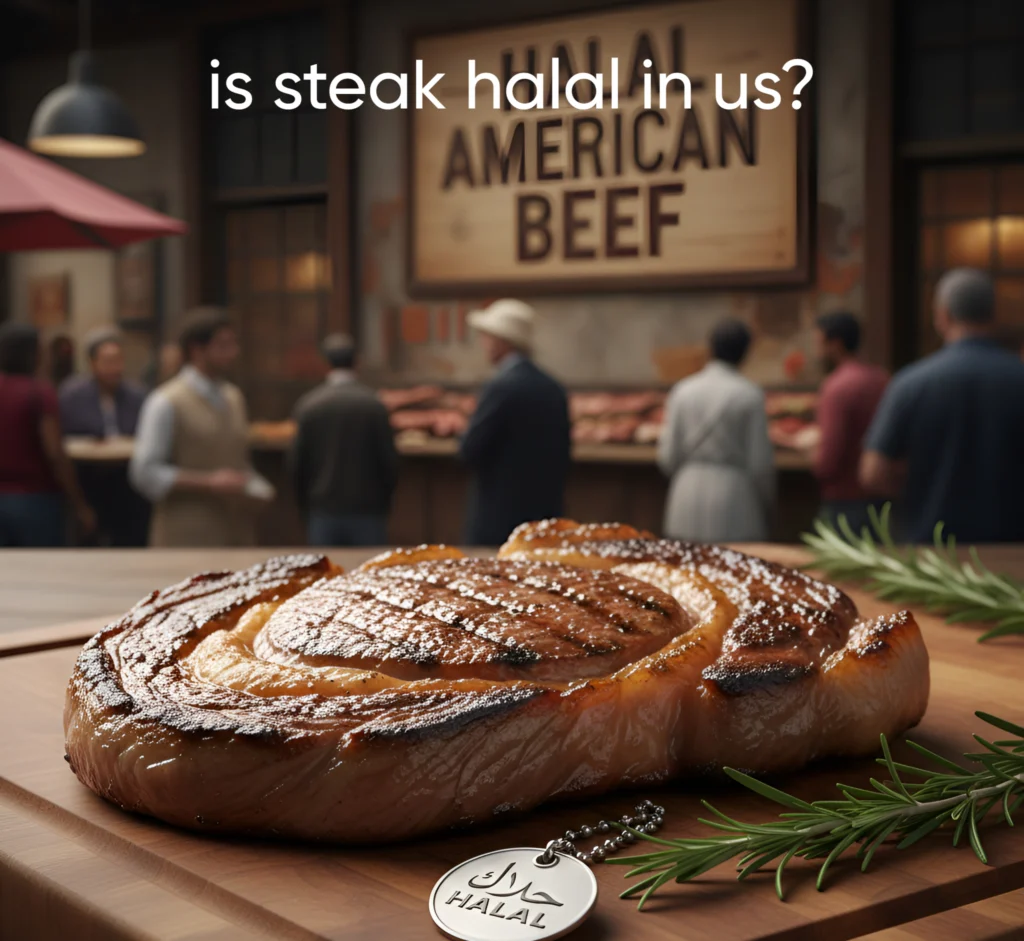
For many Muslims living in or visiting the United States, one common and important question comes up again and again: Is steak halal in the US? Steak is a popular and widely available food, but halal dietary rules add an extra layer of concern when it comes to meat consumption.
The short answer is: steak can be halal in the US, but not all steak is halal. Whether it is permissible to eat depends entirely on how the animal was raised, slaughtered, and processed.
In this article, we’ll break everything down in simple terms—no complicated religious language—so you can confidently decide what’s halal, what’s not, and what to look for when buying or ordering steak in the US.
What Makes Steak Halal?
Before understanding steak in the US, it’s important to know what makes meat halal in the first place.
For steak (beef) to be halal, all of the following conditions must be met:
The Animal Must Be Halal
Cows are halal animals in Islam, so beef itself is allowed. The issue is not the animal—it’s the process.
Halal Slaughter (Zabiha)
The cow must be slaughtered according to Islamic guidelines:
- The throat, windpipe, and blood vessels are cut
- The name of Allah is mentioned before slaughter
- The blood is fully drained from the body
- A sharp knife is used
Humane Treatment
Islam requires animals to be treated kindly and not tortured or stunned in a way that causes death before slaughter.
If any of these conditions are missing, the steak is not halal, even if it comes from a cow.
Is Regular Steak in the US Halal?
In most cases, regular steak sold in the US is not halal.
Here’s why:
- Most US meat is processed using industrial slaughter methods
- Animals are often stunned electrically or mechanically
- The name of Allah is not recited
- Blood may not be fully drained
Because of this, steak from:
- Grocery stores
- Mainstream restaurants
- Fast food chains
- Steakhouses
is generally not halal unless clearly labeled or certified.
Can Steak Be Halal in the US?
Yes—absolutely. Halal steak does exist in the US, but you need to know where to find it.
Halal Butcher Shops
Many cities have halal meat markets that sell:
- Fresh halal steak
- Grass-fed halal beef
- Locally sourced halal meat
These butchers usually follow Islamic slaughter guidelines strictly.
Halal Grocery Stores
Large Muslim communities often have grocery stores that carry halal beef clearly labeled and certified.
Halal-Certified Brands
Some meat brands in the US specialize in halal products and work with certified slaughterhouses.
Halal Restaurants
Many restaurants advertise halal steak. Always:
- Ask about certification
- Confirm the source of their meat
What About Steak at Restaurants?
This is where things can get tricky.
Steakhouses
Most traditional American steakhouses do not serve halal steak, even if the meat is beef.
Muslim-Owned or Halal Restaurants
These are more reliable, but it’s still okay to ask questions:
- Is the steak halal?
- Is it Zabiha?
- Who certifies the meat?
A good halal restaurant will always be transparent.
Is “Vegetarian-Fed” or “Organic” Steak Halal?
No. These labels do not make steak halal.
While terms like:
- Organic
- Grass-fed
- Free-range
- Hormone-free
are great for health and ethics, they do not address Islamic slaughter requirements.Halal is about how the animal is slaughtered, not just how it’s raised.
What About “Halal-Style” or “Muslim-Friendly” Steak?
Be careful with these terms.
- “Halal-style” does not guarantee halal slaughter
- “Muslim-friendly” is a vague marketing term
Always look for:
- Halal certification
- Trusted halal authority
- Clear labeling
If it’s unclear, it’s better to avoid it.
Is Kosher Steak Halal?
This is a common question.
Some scholars allow kosher meat, while others do not. The difference comes down to:
- Different slaughter requirements
- Differences in religious rulings
If you follow the opinion that kosher meat is halal, kosher steak may be acceptable. However, many Muslims prefer certified halal steak to avoid doubt.
When in doubt, choose halal-certified beef.
How to Identify Halal Steak in the US
Here are practical tips you can use anytime:
Look for Halal Certification
Logos from trusted halal organizations are the safest option.
Ask Questions
Don’t feel awkward asking:
- Where is the meat sourced?
- Is it Zabiha?
- Who certifies it?
Read Labels Carefully
“Beef” alone does not mean halal.
Why Halal Steak Matters to Muslims
Halal food is not just a preference—it’s a religious obligation.
Eating halal:
- Strengthens faith
- Encourages ethical treatment of animals
- Brings peace of mind
- Aligns daily life with Islamic values
For many Muslims in the US, choosing halal steak is about conscious living, not just food.
Common Myths About Halal Steak in the US
All Beef Is Halal
False. The animal may be halal, but the process matters.
Saying “Bismillah” Makes It Halal
Saying Bismillah does not make non-halal meat halal after slaughter.
Halal Meat Is Less Safe
Halal meat is just as safe—and often more carefully handled.
See Also: Is Non-Alcoholic Wine Halal? A Complete, Honest Guide for Muslims
Conclusion
After reviewing Islamic dietary laws, scholarly opinions, and halal slaughter requirements, it becomes clear that steak itself is not automatically halal or haram. The permissibility of steak depends on key conditions, including the type of animal, the method of slaughter, and whether Allah’s name was mentioned at the time of slaughter. If the steak comes from a halal animal such as cow or sheep and is slaughtered according to Islamic guidelines, then it is considered halal.
However, if the steak is sourced from a haram animal or slaughtered in a non-Islamic way, it becomes impermissible to consume. Muslims are therefore advised to verify halal certification or confirm the slaughter process before eating steak. Understanding these conditions helps Muslims make informed choices and ensures their food remains in accordance with Islamic principles.
For more like this visit : Hilalinfohub
