
Introduction
Hibachi has become a globally recognized dining experience, celebrated for its lively grill-side cooking, sizzling aromas, and interactive presentation. From casual eateries to high-end restaurants, hibachi dining appeals to a wide audience. However, for Muslim diners, the question often arises: “Is hibachi halal?”
The answer is nuanced. Hibachi can be halal, but its permissibility depends on factors like meat sourcing, the use of alcohol in sauces, and cross-contamination in shared grills. Understanding these nuances is essential for enjoying hibachi safely while adhering to halal dietary laws.
This article provides an in-depth, professional guide covering everything you need to know about hibachi and halal compliance, including ingredients, cooking methods, restaurant practices, and safe alternatives.
What Is Hibachi?
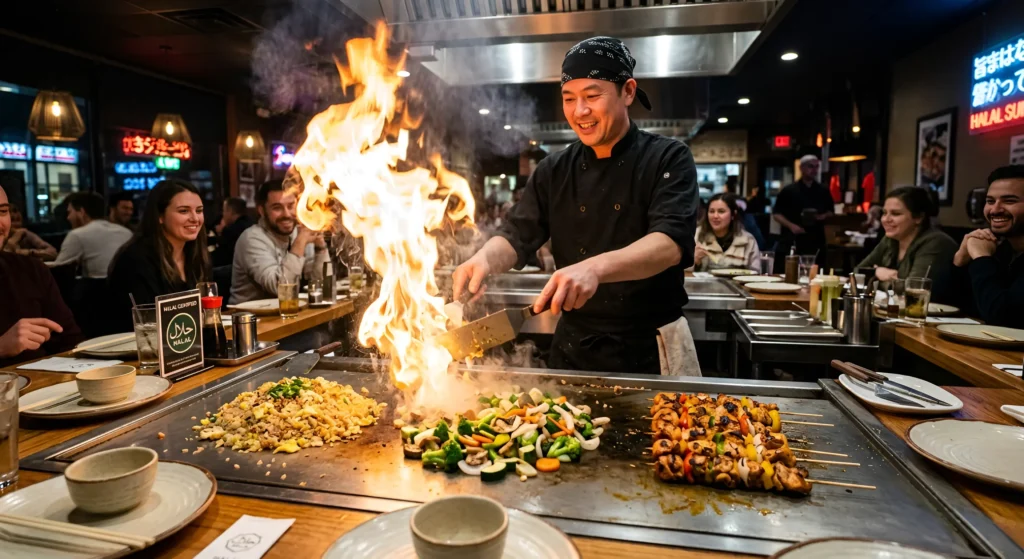
“Hibachi” originates from Japan and traditionally refers to a small, portable grill used for cooking over an open flame. In Western countries, however, “hibachi” often refers to teppanyaki-style dining, where chefs cook food on a flat iron griddle in front of guests.
Typical hibachi meals include:
- Chicken, beef, or seafood
- Vegetables and mushrooms
- Fried rice and noodles
- Signature sauces (teriyaki, soy-based glazes)
While the cooking method itself is neutral, the halal status of hibachi depends entirely on what ingredients are used and how they are prepared.
Understanding Halal Food
Halal, meaning “permissible” in Arabic, defines foods allowed under Islamic law. Beyond religious observance, halal emphasizes ethical sourcing, cleanliness, and safe preparation.
Key Halal Requirements for Hibachi
| Requirement | Explanation | Why It Matters for Hibachi |
|---|---|---|
| Halal-Certified Meat | Meat must come from animals slaughtered according to Islamic law | Core determinant of halal status |
| No Pork | All pork and by-products are strictly forbidden | Prevents contamination |
| Alcohol-Free | Alcohol cannot be used in marinades or sauces | Many hibachi sauces traditionally contain mirin or sake |
| Clean Preparation | Separate utensils and cooking surfaces | Prevents cross-contamination with non-halal items |
Without these safeguards, hibachi dishes—even with halal ingredients—may not be halal in practice.
Common Hibachi Ingredients and Their Halal Status
Understanding the typical ingredients used in hibachi cuisine is critical for determining permissibility.
| Ingredient | Common Use in Hibachi | Halal Status |
|---|---|---|
| Chicken | Grilled main protein | Halal if certified |
| Beef | Steak or sliced stir-fry | Halal if certified |
| Shrimp | Seafood dishes | Generally halal |
| Soy Sauce | Marinade and flavoring | Usually halal (check for additives) |
| Teriyaki Sauce | Sweet glaze for meats | May contain alcohol (check label) |
| Mirin / Sake | Traditional Japanese cooking | Not halal |
| Butter / Oil | Cooking fat | Halal if pure and uncontaminated |
| Vegetables & Mushrooms | Sautéed or grilled | Halal |
Pro Tip: Even fully halal ingredients can become non-halal if cooked on the same grill as pork or alcohol-based dishes.
Related post : Halal Bites UK 2026
Factors That Make Hibachi Non-Halal
1. Alcohol in Cooking
Many traditional hibachi sauces, including teriyaki or mirin-based glazes, contain alcohol. Even small amounts invalidate halal compliance.
2. Cross-Contamination
Shared grills, utensils, or oil can mix halal ingredients with pork or non-halal meat, compromising the dish’s permissibility.
3. Non-Halal Meat
Some hibachi restaurants use standard meat sourced without halal certification.
How to Ensure Your Hibachi Is Halal
To enjoy hibachi safely, diners should follow a structured approach:
- Verify Meat Certification – Confirm that chicken, beef, or other meats are halal-certified.
- Check Sauces – Ask specifically whether teriyaki, soy, or other glazes contain alcohol.
- Request Separate Cooking – Ensure your food is cooked on a clean, uncontaminated surface.
- Choose Seafood or Vegetarian Options – These are generally safer if halal-certified meat is unavailable.
- Observe Kitchen Practices – A professional kitchen with strict separation policies ensures compliance.
Halal Hibachi Restaurants
Halal hibachi restaurants are increasingly available in metropolitan areas with diverse populations. Features of these establishments include:
- Halal-certified meat only
- Alcohol-free sauces
- Dedicated cooking stations to prevent cross-contamination
While still limited compared to conventional hibachi spots, these restaurants provide peace of mind for Muslim diners.
Hibachi Alternatives for Halal Dining
If halal hibachi is not accessible, alternatives include:
- Home Cooking – Hibachi-style meals can be prepared with halal ingredients and personal control over sauces.
- Seafood Hibachi – Generally safe if grilled separately from non-halal items.
- Halal Teppanyaki Restaurants – Some restaurants specialize in halal-compliant teppanyaki, preserving the hibachi experience.
Industry Trends: Halal Adaptation in Asian Cuisine
The global halal market has influenced how Asian cuisine, including hibachi, is served:
- Halal-certified Japanese restaurants are emerging in major cities
- Alcohol-free sauces are replacing traditional mirin or sake-based marinades
- Dedicated cooking stations and utensils for halal meals are becoming standard
These trends reflect a broader shift towards inclusivity and transparency, ensuring that halal diners can enjoy hibachi safely.
Related post : Halal Bites in the U.S. 2026
Summary: Key Points About Halal Hibachi
| Aspect | Halal Status | Notes |
|---|---|---|
| Chicken / Beef | Halal if certified | Ask for certification |
| Seafood | Generally halal | Ensure no cross-contamination |
| Sauces | May contain alcohol | Check ingredients carefully |
| Cooking Practices | Shared grills may compromise halal | Request separate cooking |
| Dining Experience | Can be fully halal | Requires verification and attention |
In short, hibachi is not automatically halal, but it can be made halal if proper care is taken. Knowledge, preparation, and restaurant selection are the keys to compliance.
FAQs About Hibachi and Halal
1. Can Muslims eat hibachi chicken?
Yes, if the chicken is halal-certified and cooked without alcohol or cross-contamination.
2. Is fried rice in hibachi halal?
It can be, provided no non-halal ingredients or alcohol-based sauces are used.
3. Can seafood hibachi be halal?
Generally yes, but ensure separate cooking from non-halal items.
4. How can I find halal hibachi restaurants?
Use online directories, halal food apps, or search for certification badges at restaurants.
5. Are sauces the main concern for halal hibachi?
Yes. Alcohol-containing sauces like mirin or sake are common and must be avoided or substituted.
Conclusion
Hibachi offers an exciting and interactive dining experience, but its halal status is conditional. While the cooking style itself is neutral, ingredients, sauces, and kitchen practices determine whether a dish is halal.
For Muslim diners, the keys to enjoying hibachi safely are:
- Verifying halal-certified meat
- Avoiding alcohol-based sauces
- Ensuring separate cooking surfaces to prevent contamination
As demand for halal food grows globally, more hibachi restaurants are adapting their menus and cooking practices. With awareness and careful selection, halal hibachi dining is not only possible—it can be just as flavorful and fun as the traditional experience.
