
Introduction
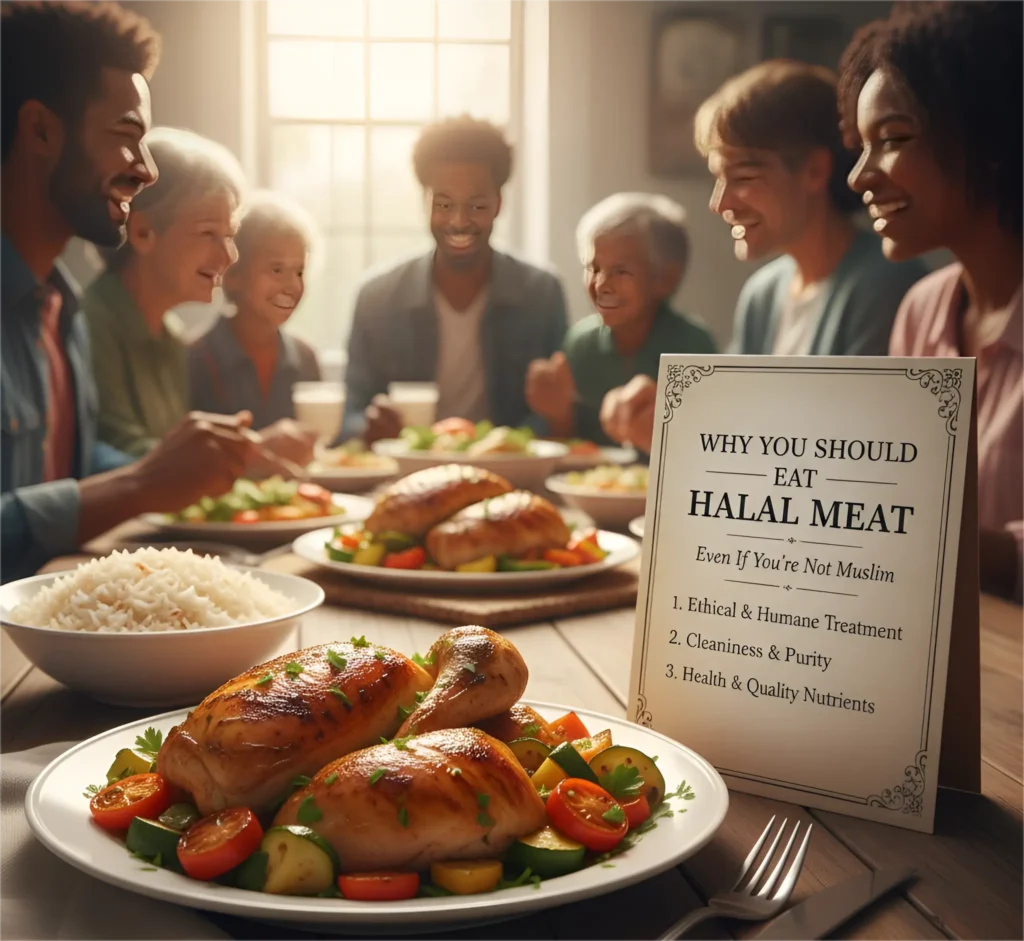
In recent years, halal food has grown from a niche religious requirement to a global food trend embraced by millions — including those who have no connection to Islam at all. In cities across Europe, North America, Asia, and Africa, halal restaurants and butchers are seeing rising demand from non-Muslim consumers who simply want higher-quality meat.But what exactly is driving this shift? Why are more people asking: “Should I eat halal meat even if I’m not Muslim?”
The short answer: Halal meat is not just a religious principle. It’s a philosophy of food grounded in cleanliness, ethical treatment of animals, high-quality slaughtering standards, and conscious consumption.In this article, we explore — in depth and in simple human language — why halal meat is becoming a preferred choice for people from all walks of life.
What Exactly Makes Meat ‘Halal’?
Before diving into why non-Muslims choose halal, it’s important to understand what halal really means.
Halal is an Arabic term meaning permissible or lawful. When it comes to food — especially meat — halal refers to both how the animal is raised and how it is slaughtered. It is a holistic approach that focuses on:
- Ethical treatment of the animal
- Cleanliness and purity
- Respectful slaughter
- Complete draining of blood
- Avoidance of harmful substances
- Ensuring the meat is healthy and safe to consume
Halal meat must come from animals that are healthy, well-fed, and treated humanely throughout their lives. The slaughtering process is designed to be quick, clean, and compassionate, minimizing suffering.In other words, halal isn’t just a religious label — it’s a quality standard.
To Learn about Is McDonald’s Halal? A Country-by-Country Guide for 2025 visit it.
Halal Meat Is Known for Being More Ethical
Even people who have no interest in religion often care deeply about ethical eating. Many consumers want to know:
- Was the animal treated with respect?
- Was it fed properly?
- Was it stressed?
- Did it live in humane conditions?
Halal principles emphasize humane treatment long before the moment of slaughter, ensuring:
No animal cruelty
Halal animals must be well cared for, cannot be abused, and must live in clean conditions.
Animals must be healthy
Sick, weak, or injured animals are not permissible.
Minimal stress during slaughter
The animal must be calm, not frightened, and treated respectfully.Halal slaughter is meant to be quick and painless when performed correctly. Many non-Muslims choose halal specifically because they feel it aligns with modern ethical farming values.
Halal Meat Is Often Cleaner and Safer
Cleanliness is a major part of halal requirements. From the farm to the butcher shop, hygiene is taken seriously.Here’s why many consumers believe halal meat is cleaner:
• Blood is fully drained
This is a key requirement. Blood can carry bacteria, toxins, and impurities — draining it reduces the risk of spoilage and foodborne illnesses.
• Meat undergoes additional inspections
Halal certifiers often perform extra checks to ensure the animal, equipment, and environment meet the standards.
• No contamination with harmful substances
Halal prohibits:
- Hormonal injections
- Excessive antibiotics
- Meat from dead animals
- Impurities
For health-conscious consumers, this is a major advantage.
Many People Find Halal Meat Tastes Better
Taste is subjective, but a large number of non-Muslim consumers say they prefer the flavor and tenderness of halal meat.
Draining the blood improves taste
Blood can give meat a metallic or bitter taste. When removed fully, the meat tends to taste cleaner and more natural.
Healthier animals create better meat
Animals raised in stress-free, hygienic environments produce higher-quality meat with better texture.
Halal slaughtering protects meat fibers
A smooth, quick cut preserves muscle quality, resulting in meat that is:
- More tender
- Juicier
- Easier to marinate
- Better in flavor
Restaurant owners often choose halal simply because customers notice the difference.
Halal Meat Avoids Harmful Additives and Chemicals
Modern farming often relies heavily on:
- Growth hormones
- Antibiotics
- Chemical preservatives
- Processed feed
- Artificial enhancements
Halal standards restrict or eliminate many of these, offering a more natural alternative.
Why this matters:
Chemicals used in conventional farming have been linked to:
- Hormonal imbalance
- Digestive issues
- Allergies
- Long-term health concerns
While not all halal farms are 100% organic, the rules greatly reduce the chances of consuming chemical-laden meat. For people who want cleaner, purer food, this is a major benefit.
Halal Meat Provides Better Animal Welfare Standards
Animal welfare has become a global concern, with documentaries, activists, and organizations advocating against industrial farming practices.Halal rules directly address these issues.
Halal prohibits:
- Torture
- Confinement in tiny spaces
- Feeding animals harmful substances
- Overworking animals
- Slaughtering sick or mistreated animals
Even non-Muslims who care about compassion and kindness toward animals appreciate these values.
Halal Is Part of the Ethical Eating Movement
Food trends today are shifting dramatically. People want:Ethical farming,Humane treatment of animals,Clean nutrition,Transparent sourcing,No hidden chemicals.Halal fits naturally into this modern movement, even though its standards are centuries old.
Many non-Muslims who already prefer:
- Free-range
- Grass-fed
- Organic
- Ethically sourced
find halal meat completely aligned with their lifestyle.
Halal Certification Encourages Transparency
One of the biggest frustrations in the food industry is the lack of transparency. Labels can be misleading, and consumers often feel in the dark about how their food is produced.Halal certification changes this.
Halal products must provide:
- Clear origin of the meat
- Verified slaughter method
- Checking for contamination
- Detailed handling process
- Trusted certification sources
For people who value honesty in food labeling, halal is a breath of fresh air.
Halal Meat Aligns With Health-Conscious Lifestyles
Many non-Muslims who switch to halal meat do so purely for health reasons. Halal’s emphasis on cleanliness, purity, and natural ingredients resonates with:
- Athletes
- Fitness enthusiasts
- People on high-protein diets
- People with digestive sensitivities
- Families who want clean meat for their kids
Health-conscious shoppers often find halal meat:
- Leaner
- Cleaner
- Easier to digest
- Lower in toxins
While halal doesn’t automatically mean organic, many halal farms already use organic or semi-organic practices.
Halal Slaughter Is Designed to Reduce Toxins and Stress Hormones
Something many people don’t know:
An animal’s stress level affects the quality of its meat.
When animals experience fear, their bodies release:
- Cortisol
- Adrenaline
- Lactic acid
These hormones can:
- Toughen the meat
- Increase acidity
- Speed up spoilage
- Affect taste
- Reduce nutritional value
Halal slaughter emphasizes calmness and minimizes stress, which can lead to healthier and better-tasting meat.
Halal Is Becoming More Accessible Globally
In many countries, halal food is no longer limited to Muslim communities. It is available in:
- Major supermarkets
- Butcher shops
- Restaurants
- Fast-food chains
- Specialty health stores
- International markets
This ease of access has encouraged non-Muslims to try halal meat simply out of curiosity — and many end up sticking with it because of the quality.
Eating Halal Supports Small, Ethical Farmers
Many halal meat suppliers are small-scale farmers or family businesses that prioritize natural feeding and humane conditions. Supporting halal often means supporting:
- Local farmers
- Ethical businesses
- Sustainable practices
- Transparent sourcing
This is important for consumers who want to move away from large industrial livestock operations.
Halal Meat Aligns With Cultural Appreciation
In a globalized world, people are increasingly open to exploring food traditions from different cultures. Just as non-Japanese people enjoy sushi or non-Indians enjoy curry, non-Muslims are exploring halal cuisines:
- Middle Eastern
- Turkish
- Pakistani
- Indonesian
- African
- Bangladeshi
- Malaysian cuisine
Eating halal meat becomes part of enjoying these diverse culinary experiences.
Final Thoughts: Should You Eat Halal Meat Even If You Are Not Muslim?
Absolutely — and millions already do.Choosing halal meat is not about religion for many people. It’s about conscious, ethical, and healthy living. The principles behind halal — humane treatment, cleanliness, purity, and quality — appeal to anyone who cares about what they put into their body.
Whether you are motivated by:
- ethics
- animal welfare
- taste
- health
- cleanliness
- or simply curiosity
halal meat offers a compelling alternative to conventional options.You don’t have to be Muslim to appreciate high-quality, responsibly produced food. Halal is for anyone seeking meat that is cleaner, kinder, and more natural.
For more like this visit : Hilalinfohub
