
Introduction
Kombucha — the fizzy, tangy fermented tea — has become a global wellness trend. It’s often praised for its probiotics and potential health benefits, but one question frequently arises among Muslim consumers: Is kombucha halal?
Because kombucha is made through fermentation, some people worry it might contain alcohol. In this article, we’ll explain what kombucha is, how it’s made, how much alcohol it actually contains, and what Islamic scholars say about whether it’s permissible to drink. By the end, you’ll know exactly how to determine if your kombucha is halal.
What Exactly Is Kombucha?
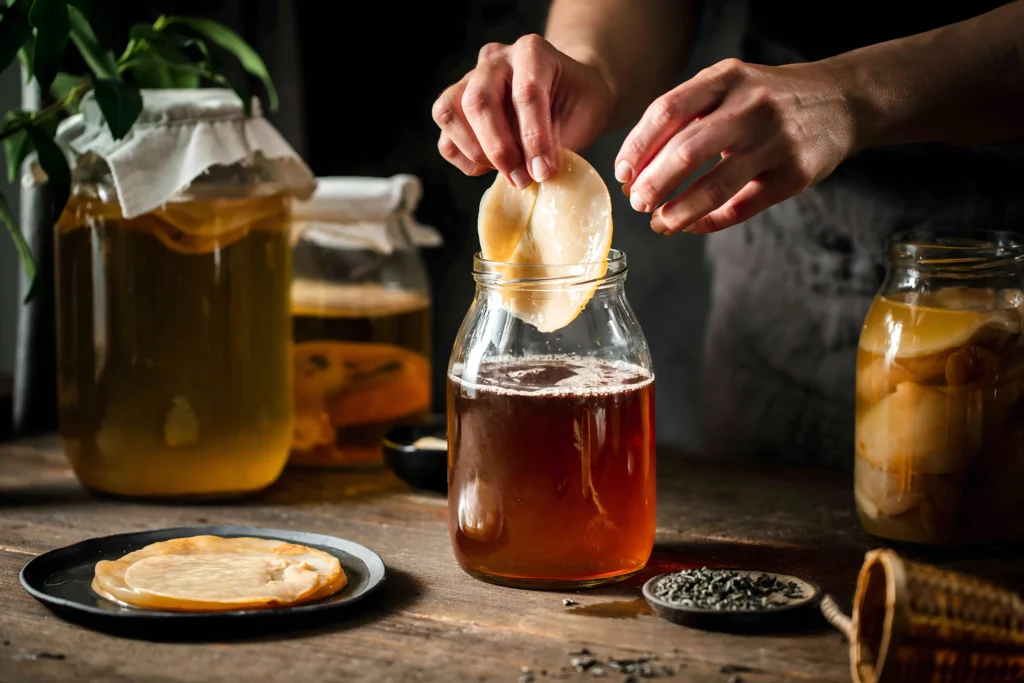
Kombucha is a drink made by fermenting sweetened black or green tea with something called a SCOBY — a Symbiotic Culture of Bacteria and Yeast. During fermentation, the yeast consumes sugar and releases small amounts of alcohol and carbon dioxide. The bacteria then convert most of that alcohol into organic acids, which gives kombucha its signature tangy flavor.
Because the process involves a bit of natural alcohol production, many Muslims wonder if that makes the drink haram. But as we’ll see, the answer depends on how much alcohol is present, why the drink is made, and how it’s consumed.
Why Muslims Question Kombucha’s Halal Status
In Islam, any drink that can intoxicate — even in large amounts — is haram. The Qur’an strictly prohibits intoxicants, and beverages that are intentionally fermented to produce alcohol fall into this category.
However, not all fermentation is forbidden. Many halal foods are made using fermentation, such as soy sauce, vinegar, yogurt, and bread. The key distinction is intention and intoxication:
- Was the drink created with the purpose of becoming alcoholic?
- Can it intoxicate when consumed in normal amounts?
If the answer to both is no, then most scholars consider it permissible.
How Much Alcohol Is in Kombucha?
Studies show that typical commercial kombucha contains very small amounts of alcohol — usually between 0.1% and 0.5% ABV (alcohol by volume). This is comparable to what’s found in fruit juices, ripe bananas, or even some types of bread.
Most countries consider drinks under 0.5% ABV to be non-alcoholic, meaning they won’t cause intoxication no matter how much you drink. Many halal authorities follow the same reasoning: if a beverage cannot intoxicate even when consumed in large amounts, it remains halal.
However, homemade kombucha is a different story. When brewed at home, the fermentation process can be unpredictable. If it ferments too long or at a warm temperature, the alcohol level can rise above 1% ABV or more. In that case, the drink may no longer be permissible.
What Islamic Scholars Say
Islamic scholars have discussed kombucha and similar drinks in light of modern halal standards. Here’s a breakdown of their general views:
When Kombucha Is Halal
Most scholars agree that kombucha is halal if:
- The alcohol content is extremely low and cannot intoxicate.
- It is not made with the intention of creating an alcoholic beverage.
- All ingredients and processing steps are free from haram substances.
In short, as long as the kombucha is made for health or refreshment — not intoxication — and the alcohol content remains minimal, it’s permissible to drink.
When Kombucha May Be Haram
On the other hand, kombucha could be considered haram if:
- The alcohol level rises to the point where intoxication is possible.
- The brewing process is intentionally aimed at producing alcohol.
- Non-halal ingredients are used, such as flavorings extracted with alcohol.
Some “hard kombucha” products, for example, are intentionally brewed to reach 3% to 7% ABV. These are clearly haram and should be avoided.
The 0.5% Rule: A Common Halal Benchmark
Many halal certification bodies use 0.5% ABV as a practical threshold. Drinks below this limit are considered non-intoxicating and therefore halal. This benchmark aligns with global food safety standards for “non-alcoholic” beverages.
However, some stricter scholars take a more conservative stance, arguing that any intentionally fermented drink should be avoided regardless of its alcohol level. Ultimately, the decision comes down to personal conviction and the guidance of your preferred halal authority.
Commercial Kombucha vs. Home-Brewed Kombucha
Let’s compare the two:
Commercial Kombucha
- Usually produced in controlled environments
- Alcohol levels are tested and regulated
- Some brands carry halal certification
- Some may not disclose exact alcohol content
- Flavored versions may contain questionable additives
Commercial kombucha is generally safer from a halal perspective, as most reputable brands ensure that their drinks stay under 0.5% ABV.
Home-Brewed Kombucha
- You control ingredients and brewing method
- Alcohol levels are unpredictable
- Risk of over-fermentation and contamination
- No way to verify ABV without lab testing
If you make kombucha at home, ferment it for a short period (around 7–10 days) and store it in a cool environment to keep alcohol levels low. But if you’re unsure, it’s safer to stick with a trusted commercial brand.
How to Check if Kombucha Is Halal
Here’s a quick checklist to help you choose confidently:
- Check the Label:
Look for the alcohol content. If it’s 0.5% ABV or less, it’s generally considered non-alcoholic. - Look for Halal Certification:
Some kombucha brands are now certified halal by recognized authorities. This ensures compliance with Islamic guidelines. - Avoid Hard Kombucha:
Any drink labeled as “hard kombucha” is intentionally alcoholic and should be avoided. - Inspect Ingredients:
Watch out for flavor extracts or additives made with alcohol or non-halal sources. - Mind the Storage:
Kombucha continues to ferment if left warm for too long, which can increase its alcohol content. Keep it refrigerated. - When in Doubt, Ask the Manufacturer or a Scholar:
Most reputable companies are transparent about their production process. You can also consult a qualified halal expert if you’re uncertain.
Kombucha’s Health Benefits (and Why That Doesn’t Change Halal Rulings)
Many people drink kombucha for its probiotic benefits. It’s said to aid digestion, support gut health, boost energy, and detoxify the body. While these are potential advantages, they don’t determine whether something is halal or haram.
Islamic rulings focus on content and process, not health claims. A product can be healthy and still haram — or vice versa. Therefore, the health benefits are simply a bonus if the kombucha is already halal-compliant.
Kombucha in Muslim-Majority Countries
In places like Pakistan, Malaysia, and Indonesia, kombucha has gained popularity among health enthusiasts. Local brands often promote their drinks as halal-friendly, using controlled fermentation to keep alcohol levels low.
However, halal certification is not always displayed on packaging. If you’re in such regions, it’s best to contact the company directly or check with national halal authorities before purchasing.
Common Myths About Kombucha and Halal Rules
Let’s clear up a few misconceptions:
Myth 1: All fermented foods are haram.
False. Many halal foods use fermentation (like yogurt, soy sauce, and vinegar). What matters is the purpose and result of fermentation.
Myth 2: Kombucha always contains high alcohol.
False. Most commercial kombucha has less than 0.5% ABV — not enough to cause intoxication.
Myth 3: The presence of any alcohol automatically makes something haram.
Not necessarily. If the alcohol is produced naturally in trace amounts and is not intoxicating, it is generally considered permissible.
So, Is Kombucha Halal or Haram?
After reviewing the evidence and Islamic rulings, here’s the balanced conclusion:
Kombucha is halal when:
- It contains less than 0.5% alcohol.
- It’s not intended or capable of causing intoxication.
- It’s made with halal ingredients and proper hygiene.
Kombucha may be haram when:
- It contains enough alcohol to intoxicate.
- It’s labeled as “hard kombucha.”
- It includes haram additives or is brewed with alcohol-based flavorings.
In essence, most commercial kombucha brands are halal, while homemade or “hard” varieties require caution.
Conclusion
Kombucha can be a refreshing, healthy addition to your diet — and yes, it can be halal. The key is understanding how it’s made and ensuring it meets Islamic dietary principles.
If you choose trusted brands, check alcohol levels, and avoid anything intentionally alcoholic, you can enjoy kombucha without compromising your faith. And as always, when in doubt, seek guidance from your local halal authority.
With a little awareness, you can enjoy this ancient fermented tea as part of a modern halal lifestyle — fizzy, flavorful, and completely permissible.
For more like this visit : Hilalinfohub
