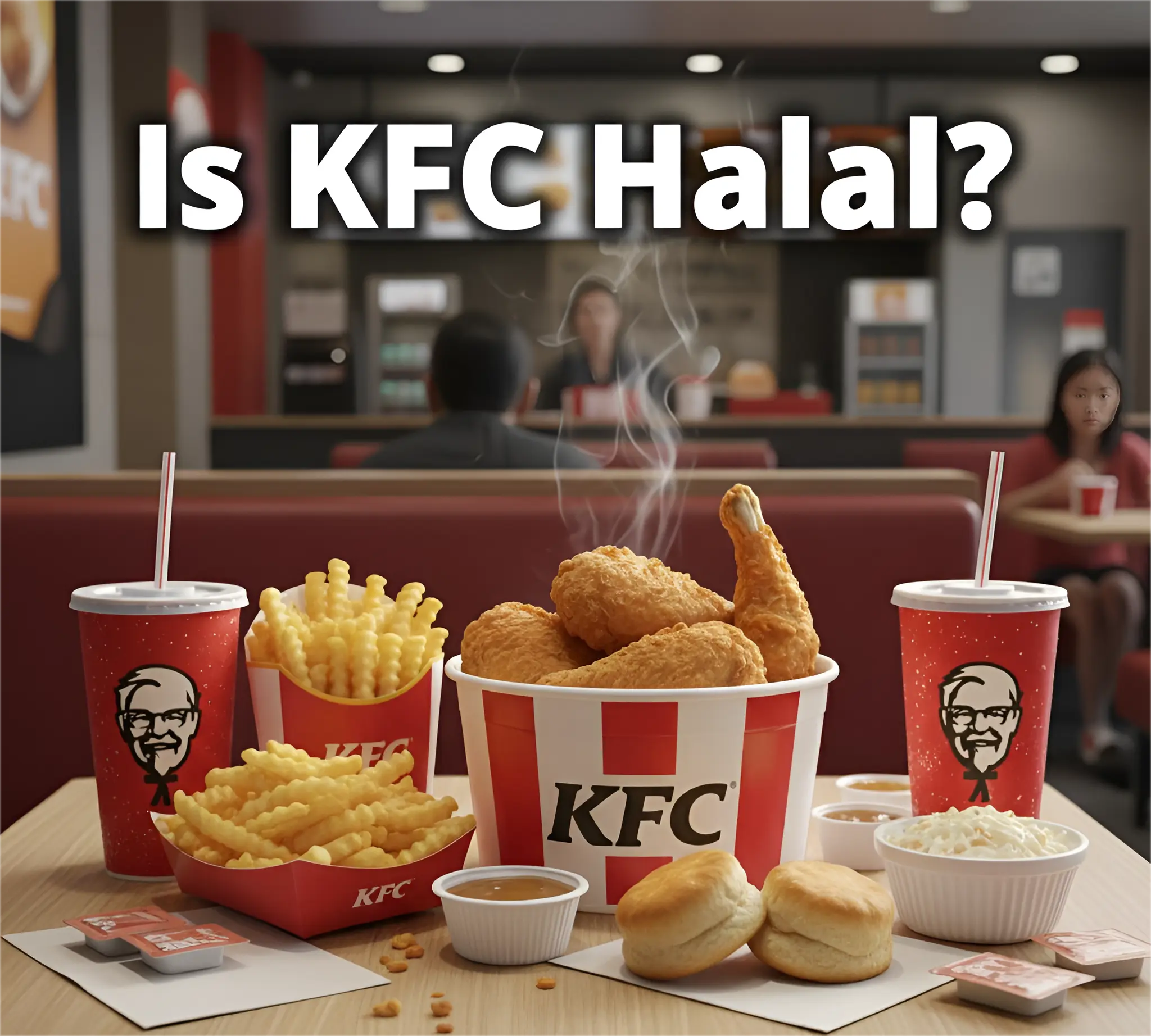
Is KFC Halal? A Global Guide to Kentucky Fried Chicken’s Halal Status
Introduction
Let’s be honest. That craving for KFC is intense. That crispy, golden-brown skin, the secret blend of 11 herbs and spices—it’s iconic. But for millions of Muslims around the world, sinking your teeth into a piece of Colonel Sanders’ famous chicken comes with a crucial, non-negotiable question: Is KFC Halal?
You’ve probably Googled it a thousand times, only to get confusing, contradictory answers. That’s because KFC isn’t a single, monolithic entity; it’s a global giant operating in 118 different countries, each with its own rules, regulations, and religious authorities. What’s Halal in Kuala Lumpur might not be Halal in London.
The most direct, honest answer is: It’s complicated, and it depends entirely on where you are standing.
We’re here to give you the comprehensive, easy-to-digest guide you need. We’ll break down the rules, look at the policies country by country, and most importantly, tell you exactly how to verify your meal so you can eat that Drumstick with total peace of mind.
What Halal Really Means (and Why Stunning is the Sticking Point)
Before we talk about the chicken, let’s briefly talk about the concept. Halal (Arabic for permissible) isn’t just about avoiding pork. It’s a holistic system of ethics and law governing how food—especially meat—is sourced, prepared, and consumed.
The Halal Check List for Chicken
To be Halal, poultry must generally adhere to these core principles:
- The Right Cut: The animal must be slaughtered through the Dhabihah method—a swift, clean cut to the throat, severing the major vessels to allow for complete drainage of blood (the consumption of blood is forbidden, or Haram).
- The Divine Intention: The name of God (Bismillah, Allahu Akbar) must be recited at the time of slaughter.
- Humane Treatment: The method must be carried out humanely, minimizing pain and stress.
- No Contamination: The finished product must never touch or be prepared with any Haram substances (like alcohol or pork).
The Elephant in the Room: Stunning
This is where the debate gets heated, especially in Western markets. Most modern, large-scale slaughterhouses use pre-slaughter stunning (usually a reversible electric stun) to immobilize the bird. This is often mandated by local animal welfare laws.
- The Permissive View: Some Halal authorities allow stunning, provided the animal is certified to be alive and healthy before the neck cut is made. They view it as a humane way to prepare the animal for Dhabihah.
- The Strict View (Non-Stunned): Other, stricter authorities believe any stunning is a violation of the traditional Dhabihah method and insist on non-stunned meat to guarantee the purest form of Halal.
Why does this matter? KFC’s certified Halal chicken in countries like the UK usually involves a stunning method. If your personal adherence requires non-stunned meat, even a certified Halal KFC might not meet your standards. You need to know your own limit.
The KFC Halal Report Card: Global Status Breakdown
Let’s cut to the chase and see where KFC stands across the map.
If you want to know about Is McDonald’s Halal? visit it .
Halal Markets (Eat with Confidence)
In these regions, Halal certification is the rule, not the exception, often overseen by powerful national religious bodies.
- Middle East & North Africa (MENA): Places like Saudi Arabia, the UAE, Kuwait, etc., are fully Halal. It’s a non-starter for them to operate any other way.
- Southeast Asia: Malaysia (certified by JAKIM) and Indonesia (the biggest Halal market globally) maintain exceptionally stringent, national Halal policies across the entire KFC supply chain.
- South Africa & Pakistan: KFC operates universally as Halal in these high-demand markets.
The Mixed Model (Stop and Check)
These markets are the tricky ones. They serve both Halal and non-Halal locations. You cannot assume the Halal status.
- The United Kingdom (UK): KFC UK runs a mixed fleet—some restaurants are certified Halal, most are not. They are typically certified by bodies like the Halal Food Authority (HFA) and use the stunning method.
- Your Action: You must check the front door or the KFC UK website’s dedicated list. If it doesn’t clearly say Halal, assume it’s not.
- Canada: This market is undergoing a huge change! KFC Canada is in the process of rolling out Halal chicken to nearly all its Ontario restaurants, moving toward an inclusive, national Halal supply chain.
- Your Action: Check for clear signage, especially as the rollout completes, but the trend is very positive here.
Generally Not Halal (Assume Non-Halal)
In markets where the Muslim population is a smaller portion of the customer base, corporate policy usually dictates non-Halal sourcing.
- The United States (USA):KFC in the USA is generally not Halal certified at the corporate level. Corporate policy historically discourages franchisees from making Halal claims.
- Your Action: Unless a specific, local, reputable Halal authority has issued a certificate for that exact location (and you’ve seen it), avoid it.
Your Ultimate Guide: How to Verify Your KFC Meal
Forget what you hope or what a friend told you. Here is the consumer checklist for total certainty:
Look for the Official Stamp
Halal certification is a formal, legal process. A certified store must display its credentials.
- What to look for: A clear plaque, sign, or window sticker with the logo of a reputable, local Halal body (e.g., HFA, HMC, JAKIM, etc.).
- Where to look: Near the entrance, at the cash counter, or on the menu board.
Ask the Manager for the Certificate
Don’t be shy! If you are in doubt or the sign is faded, politely ask the manager: “Could I please see your current Halal Certification certificate?”
- The Test: A genuinely certified restaurant will have the current, date-stamped certificate readily available, often near the till. If they hem and haw, be wary.
Know Your Certifying Body’s Standard
Once you see the certificate, note the organization that issued it.
- The Self-Check: If you only consume non-stunned meat, you need to verify if that specific certifying body permits stunning. For instance, in the UK, the HMC requires non-stunned, while the HFA permits stunned. This is your personal decision point.
What About Fries and Sides? The Cross-Contamination Issue
Let’s say you’re in a non-Halal KFC, but you think, “I’ll just get the fries and a coleslaw.” Be careful!
- The Oil Trap: The biggest risk with non-meat items like fries or hash browns is the frying oil. If those sides are fried in the same oil as the non-Halal chicken, they become impure (Haram) through contact according to most Islamic rulings.
- Halal Store Safety: In a properly Halal-certified KFC, all products (meat and non-meat) are sourced and prepared in a Halal environment, eliminating cross-contamination risks from Haram meat or pork ingredients.
Bottom Line: If the meat isn’t Halal, it’s safest to assume the fries aren’t either, unless the store guarantees separate, dedicated fryers.
Conclusion: Your Responsibility as a Consumer
The world of fast food is changing. Chains like KFC are slowly but surely recognizing and responding to the Halal market. Their expansion into Halal-only supply chains in Canada is a huge indicator of this trend.But until the day comes when KFC globally adopts a single, universally accepted Halal policy, the responsibility for ensuring a permissible meal rests squarely on your shoulders.You now have the information and the steps to verify. So, the next time that famous chicken craving hits, remember: Check the sign, check the certificate, and know your standard. Then, and only then, you can finally enjoy that secret recipe with total certainty.
For more like this visit : Hilalinfohub

Post Comment