
Introduction
Gambling has become incredibly common in our modern world. Casinos are advertised everywhere, sports betting apps appear on our phones, and online games often include lotteries, spins, and jackpots that promise quick rewards. With this rising popularity, a question comes up again and again:
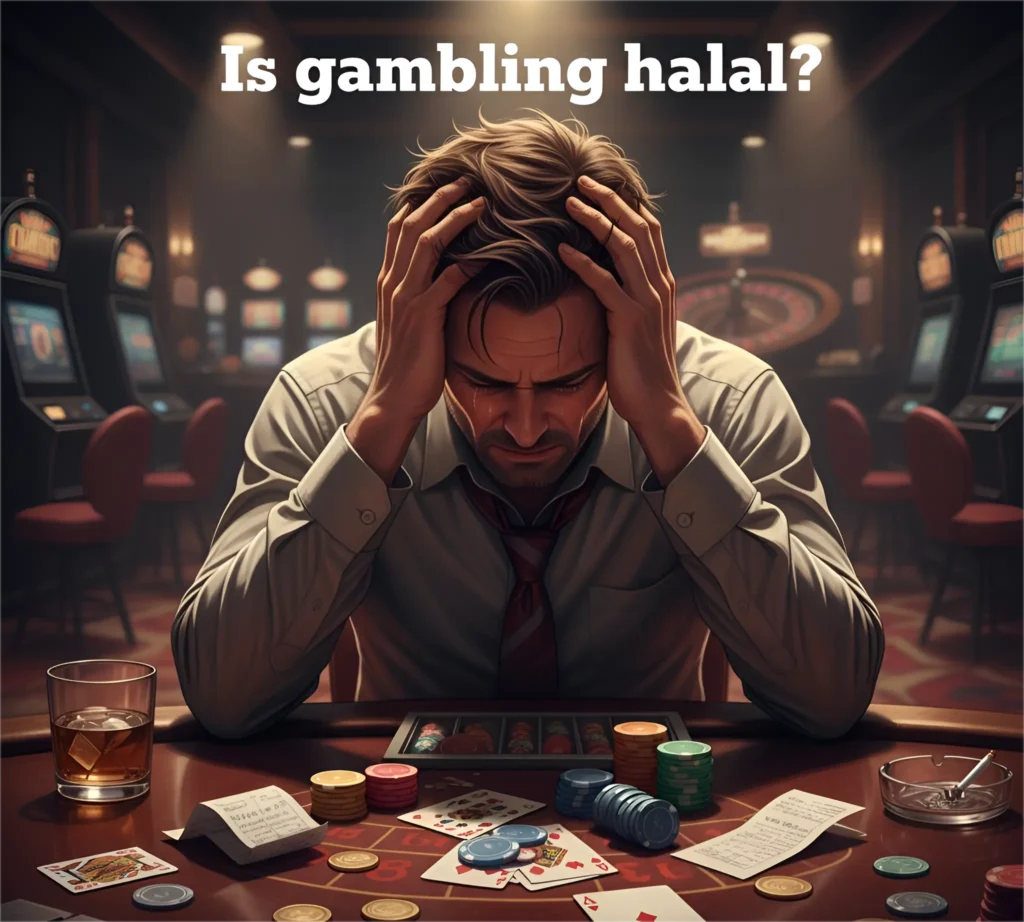
Is gambling halal?
As Muslims, we want to make choices that align with our faith. But with so many forms of gambling around us—and many disguised as “games,” “entertainment,” or “investments”—it’s important to understand what Islam actually says and why.This article breaks everything down in a human, easy-to-understand way based on the Quran, hadith, and Islamic principles. No complicated academic language—just clear explanations, relatable examples, and practical guidance.Let’s dive in.
What Exactly Is Considered Gambling in Islam?
Before answering whether gambling is halal, we need to understand what counts as gambling.The Arabic words used in Islamic texts are:
- Maysir
- Qimar
Both refer to any activity where a person risks money or valuables hoping to gain more—based mostly on chance rather than effort.
Gambling includes things like:
- Casino games (blackjack, roulette, poker, slots)
- Betting on sports, races, competitions
- Lotteries, raffles, scratch cards
- Any online gambling sites or apps
- Chance-based games where players put in money to win a prize
- Betting between friends
Even small bets count
Many people say things like:
“It’s just one dollar.”
“It’s harmless fun.”
“We’re just betting for excitement.”
But Islam doesn’t judge gambling by its size—it judges it by its nature.If someone risks money for a chance-based outcome, it becomes gambling, regardless of the amount.
Is Gambling Halal? The Clear Quranic Ruling
Islam leaves no room for doubt about the ruling on gambling. The Quran addresses it directly in multiple chapters.
Surah Al-Baqarah (2:219)
Allah acknowledges that gambling has some benefit, but the harm outweighs the benefit.This shows Islam’s balanced view: yes, gambling can be fun and exciting, and some people win money, but overall its damage—to individuals, families, and society—is greater.
Surah Al-Ma’idah (5:90–91)
These verses are even clearer. Allah commands believers to completely avoid gambling because it is:
- Impure
- From Shaytan’s influence
- A cause of hatred between people
- A distraction from prayer and remembering Allah
This is the most decisive evidence. Islam declares gambling haram—not questionable, not discouraged, but forbidden.
What the Prophet Muhammad (ﷺ) Said About Gambling
The hadith further reinforces this ruling.
The Prophet (ﷺ):
- Prohibited games of chance
- Forbade betting that involved risk or uncertainty
- Discouraged activities that lead to greed or unfairness
He even compared gambling to consuming alcohol because both take people away from remembrance of Allah and cloud their judgment.
Why Is Gambling Haram? The Wisdom Behind the Ruling
Some people ask:
“If gambling doesn’t hurt anyone, why is it forbidden?”
But the truth is, gambling harms people deeply—sometimes silently, sometimes very obviously. Islam doesn’t forbid things without purpose. There is always wisdom behind every rule.Let’s explore the main reasons.
It Encourages Unfair and Unearned Wealth
One of the core principles of Islam is that wealth should be earned through:
- Hard work
- Skills
- Knowledge
- Effort
- Fair trade
Gambling completely goes against this principle. A gambler does not produce anything, sell anything, or provide value. They simply try their luck hoping to win money from someone else’s loss.
This is why scholars call gambling:
“Consuming wealth unjustly.”
It Leads to Addiction and Destructive Habits
Gambling addiction is one of the fastest-growing addictions in the world.
People start by betting small amounts. Then they chase bigger wins. They lose, they try to win back their money. Before they realize it, they are trapped.
Addiction leads to:
- Debt
- Borrowing money
- Lying
- Stealing
- Depression
- Family conflict
- Neglecting responsibilities
Islam protects people from self-destructive behavior. Gambling is haram because it ruins lives.
It Creates Hatred and Division
How many friendships have broken because of money?
Now imagine that money was lost through gambling.
Gambling often leads to:
- Jealousy
- Blaming
- Anger
- Broken trust
Allah says these problems come from Shaytan, and that gambling is one of the tools he uses to divide people.
It Distracts from Remembering Allah
People who gamble often become absorbed in the game. Hours pass without prayer. Hearts fill with greed instead of faith.Even harmless-looking lottery tickets can shift the mind from gratitude to desperation for a “quick win.”When the heart becomes attached to luck instead of Allah, faith weakens.
Is Online Gambling Halal?
Many Muslims today ask:
“Is online gambling different? It’s just digital.”
No. The ruling does not depend on how the gambling happens but what it involves.Online gambling is as haram as traditional gambling because:
- You risk money
- The outcome is based on chance
- You may win or lose
- It distracts from worship
- It leads to addiction
Whether on a computer, mobile app, VR headset, or at a physical table—if it’s gambling, it’s forbidden.
What About Games, Apps, or Loot Boxes?
Modern gaming introduces new forms of gambling:
- Loot boxes
- Mystery spins
- Pay-to-win chance items
- Crate openings
- Randomized rewards
If real money is used to buy a chance-based reward, many scholars classify this as a form of gambling.But if the game uses in-game currencies with no real money involved, the ruling may differ. Context matters.A general guideline is:If you spend money for a chance to win something valuable, it resembles gambling.
Are All Competitions Haram? What About Sports?
Not all competitions are gambling.
Islam permits competitions that are:
- Based on skill
- Built on effort
- Fair
- Transparent
Sports and competitions are halal.So when does it become haram?When money is involved in a chance-based way.
Halal examples:
- A football match with no betting
- A chess tournament with a prize funded by a sponsor
- A Quran competition with community-funded rewards
Haram examples:
- Betting on who will win a match
- Paying entry fees that go into a prize pool of chance
- Gambling on horse races or online fantasy leagues
The key difference is risking money for chance versus earning through skill.
The Exception: Some Skill-Based Races
Islam allows prize competitions in:
- Horse racing
- Camel racing
- Archery
- Similar skill-based activities
But even these have strict rules:
- At least one competitor must not pay a stake
- The prize should preferably come from a sponsor or third party
This prevents the competition from turning into gambling.
Real-Life Stories: The Hidden Damage of Gambling
To understand why Islam forbids gambling, it helps to look at real people’s experiences.
The “Just One Time” Problem
A man tries betting once out of curiosity. He wins. The excitement is addictive. He bets again and again. One year later, he loses his savings and hides it from his family.This story is extremely common.
The Family Destroyed by Online Gambling
A young man gets into online gambling during late-night boredom. He uses his parents’ credit card thinking he will win it back. He loses $2,000, then $5,000, then more.By the time he stops, the family is in debt.
The Friendship That Fell Apart
Two friends make a friendly bet on a game. One wins. The other feels cheated. A joke turns into anger. The friendship grows distant.Islam forbids gambling because relationships matter more than money.
Spiritual Reasons Gambling Is Haram
Aside from financial and emotional harm, gambling damages a person’s spiritual well-being.
It weakens tawakkul (trust in Allah)
Gambling makes people believe luck—not Allah—decides their destiny.
It creates greed
People want fast money, not halal earnings.
It distracts from prayer
Gamblers often delay or skip salah.
It feeds the ego
Winning gives a false sense of superiority. Losing leads to anger and anxiety.Islam aims to strengthen the soul, not feed desires.
Can a Muslim Work in a Casino or Gambling Company?
Most scholars say it is not allowed, because:
- You are supporting a haram activity
- Your income becomes mixed with unlawful earnings
- You help others commit sins
Even if the job does not involve gambling directly, it still helps the system operate.
What Should a Muslim Do If They Have Gambled Before?
Islam is a religion of mercy. If someone has gambled, the door of repentance is always open.
Steps to take:
- Stop immediately
- Make sincere tawbah (repentance)
- Ask Allah for help and forgiveness
- Avoid environments or apps that trigger temptation
- Replace gambling with halal activities or hobbies
- Fix financial damage gradually
The Prophet ﷺ said that Allah loves those who repent sincerely.No matter how severe the mistake, Allah’s mercy is greater.
Final Summary: Is Gambling Halal?
After exploring the Quran, hadith, and real-life experiences, the ruling is clear:
Gambling is haram in all its forms because:
- It is based on chance, not effort
- It causes addiction
- It destroys families
- It fuels greed
- It spreads hatred
- It distracts from Allah
- It is specifically prohibited in the Quran
Whether in a casino, online, through sports betting, or hidden inside mobile games—gambling is not compatible with Islamic values.Islam encourages Muslims to seek halal income, build honest careers, enjoy halal leisure, and protect their hearts from harmful influences.
A Final Heartfelt Message
If you’re reading this because you’re struggling with gambling or curious about the ruling, remember: Islam doesn’t forbid things to make life difficult. It forbids things that harm you.Gambling feels like excitement, but it leads to emptiness.It promises wealth, but creates debt.It gives moments of thrill, but brings long-term regret.Allah wants you to live a peaceful, stable, dignified life—with earnings that nourish your soul, not drain it.
For more like this visit : Hilalinfohub
