Is Domino’s Pizza Halal? What You Need to Know (2025 Guide)
Introduction: Why People Are Asking This Question
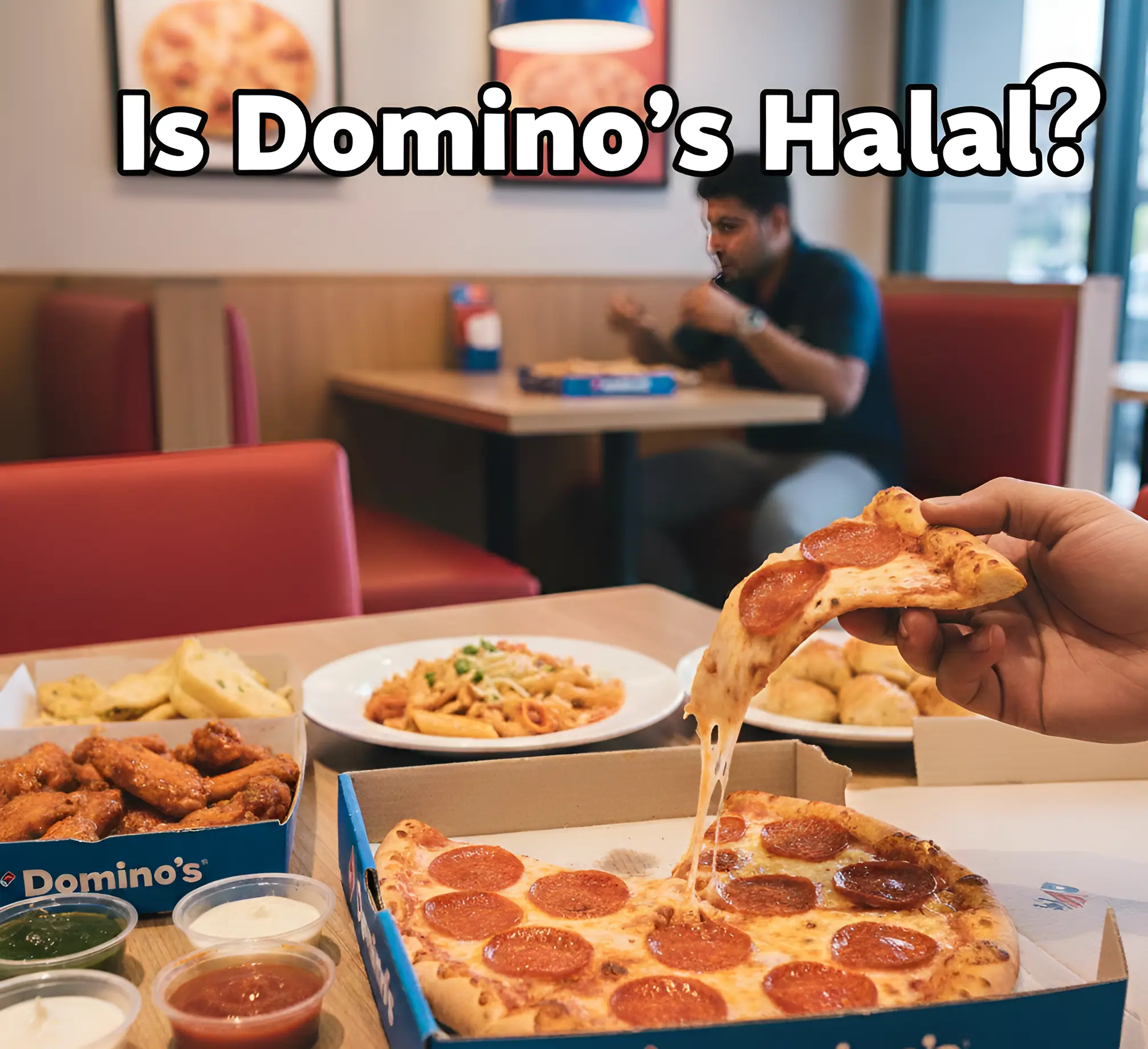
If you’re a Muslim consumer, you’ve probably found yourself asking at some point: “Is Domino’s Pizza halal?” With Domino’s being one of the biggest pizza chains in the world, it’s natural to wonder whether its ingredients, meat sources, and kitchen practices align with Islamic dietary laws.
The challenge? Domino’s is a global brand, but halal rules are local. Some countries strictly follow halal standards, while others don’t — and that can make things confusing.
This human-friendly guide breaks everything down clearly so you can make informed, confident choices before you order your next slice.
What “Halal” Means in Practice
To know whether Domino’s is halal, it helps to understand what “halal” requires. In Islamic dietary law:
- The meat must come from an animal that is permissible to eat.
- The animal must be slaughtered according to halal procedures (often called zabiha).
- Blood must be fully drained during slaughter.
- No pork or pork derivatives can be used at any stage.
- No alcohol or non-halal additives should be present.
- Food must not be contaminated through shared equipment or utensils.
- All ingredients — including cheese, sauces, and seasonings — must be free from haram elements.
This means halal isn’t just about the chicken on your pizza — it applies to the entire process from sourcing to preparation.
Why Domino’s Halal Status Differs Around the World
Here’s the important part: Domino’s does not operate under a global halal policy. Each franchise operates differently depending on local laws, suppliers, and customer demand.
So the halal status of Domino’s changes based on the country — and sometimes even the city.
In short: Domino’s can be halal, but only in certain regions.
Regions Where Domino’s Is Commonly Halal-Certified
In many Muslim-majority countries, Domino’s usually follows halal standards more strictly. These include:
Likely Halal Regions
- Pakistan
- Malaysia
- Indonesia
- Saudi Arabia
- United Arab Emirates
- Qatar
- Bahrain
- Oman
- Kuwait
In these countries, Domino’s typically:
- Uses halal-certified meat
- Avoids pork entirely
- Follows halal kitchen practices
- Displays certification from local halal authorities
If you’re ordering from Domino’s in a Muslim-majority country, there’s a strong chance the food is halal.
Regions Where Domino’s Is Often Not Halal
In Western or non-Muslim-majority regions, the situation becomes far less clear.
Commonly Non-Halal or Uncertain Regions
- United States
- Canada
- United Kingdom
- Ireland
- Australia
- New Zealand
- European countries (Germany, France, Italy, Spain, etc.)
In these areas, Domino’s often:
- Serves pork-based toppings
- Uses shared ovens for all pizzas
- Prepares halal and non-halal items in the same kitchen
- Does not hold any halal certification
- Sources meat that may not meet halal standards
- Uses the same cutters for all pizzas
Even if a branch offers “halal chicken,” the kitchen may still have cross-contamination risks — making the final product not reliably halal.
Common Misunderstandings About Domino’s and Halal Meat
Here are a few things people often get wrong:
“If the chicken is halal, the whole pizza is halal.”
Not necessarily. The chicken may be halal at the source, but shared ovens or equipment can make it non-halal.
“Vegetarian pizza is always halal.”
Not always. Vegetarian pizzas might be sliced with the same cutter used on pork-based pizzas, causing cross-contact.
“Domino’s is halal everywhere because they are a global brand.”
Domino’s adapts to local demand. Halal markets get halal menus; others do not.
“Cheese is always halal.”
Cheese can be made with animal rennet, which may not be halal unless verified.
How to Check If Your Local Domino’s Is Halal
Since halal status differs by region, here’s how to verify your local store:
Ask the store directly
Call or visit in person. Ask:
- “Is this branch halal-certified?”
- “Which authority certifies your halal standards?”
A legitimate halal-certified branch will confidently show proof.
Look for official certification
Halal stores usually display certificates inside the branch, online, or on packaging.
Pay attention to the menu
If pork toppings are available, the branch is likely not fully halal unless they maintain strict separation — which most Western branches do not.
Ask about kitchen practices
If the branch uses:
- Separate ovens
- Separate cutters
- Separate preparation zones
- you’re more likely to get a truly halal pizza.
When in doubt, avoid questionable items
If you can’t confirm halal standards, skip meat toppings and stick to vegetarian or seafood — but only if cross-contamination risks are addressed.
Why Domino’s Doesn’t Have a Global Halal Policy
There are a few reasons Domino’s hasn’t committed to a universal halal standard:
Franchise Model
Domino’s stores are independently operated, so meat sourcing and kitchen processes vary by region.
Supplier Differences
Every country has different meat suppliers, and many don’t offer halal-friendly options.
Low Halal Demand in Some Areas
In countries where few customers request halal food, Domino’s may not find certification worthwhile.
Operational Challenges
Maintaining halal standards requires strict separation in kitchens — something difficult to manage for a fast-paced pizza chain.
Cost and Regulation Differences
Halal certification involves audits, inspections, and regulatory compliance that differ by country.
Is Domino’s Halal in Muslim Countries?
Generally, yes — especially in countries like:
- Pakistan
- Malaysia
- Indonesia
- UAE
- Saudi Arabia
These regions typically display halal certification openly, making the process transparent.
However, it’s still good practice to ask your local branch for confirmation because:
- Certification may vary by city
- Franchise owners differ
- Practices may change over time
Is Domino’s Halal in Western Countries?
Often no, unless the store specifically states otherwise.
Most Western branches:
- Use non-halal pepperoni and ham
- Use shared ovens
- Have non-halal chicken in their supply chain
- Use shared cutters
- Lack certification
Even vegetarian pizzas may not be fully halal due to cross-contact.
Final Verdict: Is Domino’s Halal?
The answer depends on your location.
In Muslim-majority countries:
Domino’s is often halal-certified and safe to consume.
In Western countries:
Most Domino’s outlets are not halal-certified, and many pose cross-contamination risks.
What you should do:
- Always check with your local branch.
- Look for official certification.
- Be cautious with meat toppings in uncertified regions.
- When unsure — choose a safer alternative or avoid altogether.
With the right information and a little attention, you can enjoy your pizza while staying true to your halal dietary values.
For more like this visit: Hilalinfohub

Post Comment