
Introduction
If you’ve ever boarded an airplane and wondered, “Is the food they’re serving halal?”, you’re not alone. For many Muslim travelers, this is one of the most common questions about air travel. With airlines serving passengers from every corner of the world, meal preparation varies widely — and so does the definition of “halal” in the skies.
The short answer? Sometimes in-flight meals are halal, and sometimes they’re not. It all depends on the airline, the route, and whether you specifically requested a halal or Muslim meal before your flight.
In this article, we’ll break down what halal really means in aviation catering, how different airlines handle halal meals, what to expect when flying, and how to make sure your food truly meets Islamic dietary laws.
What Does “Halal” Mean in Airline Catering?
In everyday life, halal means “permissible” according to Islamic dietary law. For airline catering, this involves several key conditions:
- The animal used for meat must be slaughtered according to Islamic rites (zabīḥah) by a Muslim.
- The name of Allah must be invoked at the time of slaughter.
- Pork, alcohol, and their by-products must not be used.
- The meal must not come into contact with non-halal ingredients (cross-contamination).
- Ideally, the entire kitchen or catering facility should be certified by a recognized halal authority.
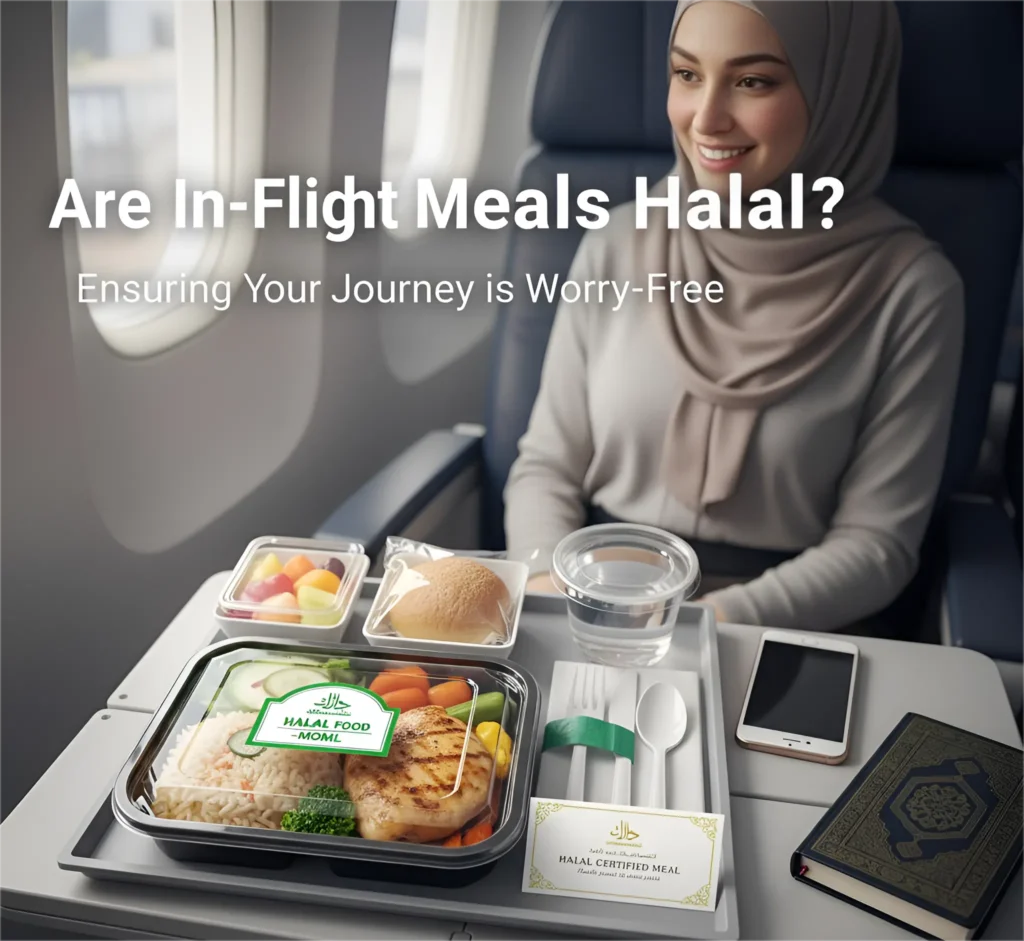
In airline systems, halal meals are usually marked as MOML — short for “Muslim Meal.” When you choose this option, you’re requesting a meal that complies with halal preparation and excludes prohibited ingredients.
However, “halal” can mean different things depending on the airline. Some carriers serve only halal meals on every route, while others provide halal meals only if you ask in advance.
Do All Airlines Serve Halal Meals?
The answer varies widely. Let’s look at how different airlines approach halal catering:
- Airlines That Serve Only Halal Meals by Default
Carriers based in Muslim-majority countries — such as Malaysia Airlines, Saudi Arabian Airlines, and Emirates — prepare all their food in accordance with halal standards. These airlines usually have halal-certified kitchens and suppliers, so you don’t need to make any special requests. - Airlines That Offer Halal Meals on Request
Many international airlines, especially those based in Europe, North America, or East Asia, don’t automatically serve halal food. Instead, they allow passengers to pre-order a “Muslim Meal” (MOML) when booking tickets or managing reservations online. Airlines like British Airways, Air France, Singapore Airlines, and United Airlines fall into this category. - Airlines That Offer Halal Meals on Certain Routes Only
Some carriers provide halal food only on flights to or from Muslim-majority regions. For example, an airline might serve halal meals on flights to Saudi Arabia or the UAE but not on flights within Europe or the Americas.
Why the Difference?
There are several reasons why halal meal availability varies between airlines and routes:
- Passenger Demographics: Airlines with a large proportion of Muslim travelers often make halal food standard on all routes.
- Catering Infrastructure: Providing halal meals requires certified kitchens, specialized staff, and separate storage areas to prevent cross-contamination. Not all airports have halal-certified catering facilities.
- Regulations and Local Laws: Some countries or airports require airlines to offer halal food on specific routes, especially during Hajj or Umrah seasons.
- Branding and Marketing: Airlines based in Muslim countries often promote themselves as “halal-friendly” or Shariah-compliant, while others treat halal meals as part of their wider “special meal” options.
- Logistics: Large airlines serving hundreds of destinations may find it difficult to standardize halal certification everywhere, especially when relying on third-party catering partners.
How to Make Sure Your In-Flight Meal Is Halal
If eating halal is important to you, there are several simple steps you can take to ensure your in-flight meal complies with Islamic dietary rules.
1. Request a Muslim Meal (MOML) When Booking
Most airlines allow you to choose a special meal at the time of booking or later through the “Manage Booking” section of their website. Look for the “Muslim Meal” or “Halal Meal” option.
- Do this at least 24 to 48 hours before your flight.
- Confirm with the airline that your meal request is recorded.
- If you booked through a travel agent, ask them to double-check the meal request for you.
2. Check the Airline’s Official Policy
Before flying, visit the airline’s website or contact customer service to learn how they handle halal food. Some airlines clearly state that all meals are halal, while others list halal under “special meals.”
3. Confirm at Check-In or Onboard
When you check in, politely ask if your halal meal request has been noted. You can also remind the cabin crew after boarding. If they are unsure, you can always opt for a vegetarian meal instead of taking a risk.
4. Be Aware of Short Flights and Budget Airlines
Short-haul flights (especially under three hours) often serve only light snacks or sandwiches. These may not always be halal-certified. Similarly, many low-cost carriers don’t have the facilities to offer special meals. In such cases, it’s best to bring your own food.
5. Carry Your Own Halal Snacks
Carrying some halal-certified snacks or a small meal can be a lifesaver — especially if your flight is delayed or your halal meal request wasn’t processed. Protein bars, nuts, sandwiches, or instant halal noodles are easy to pack.
6. Check for Certification or Labels
On some flights, your halal meal may have a label or sticker confirming its certification. The packaging might also list the catering company’s name and certification body. If you’re unsure, ask the flight attendant to clarify.
Common Issues Travelers Face
While most airlines try to accommodate dietary needs, misunderstandings can happen. Here are some common issues Muslim travelers face when it comes to in-flight meals:
- Cross-Contamination: Even if the main dish is halal, side items like desserts or sauces might contain alcohol or gelatin.
- Unclear Definitions: Some airlines interpret “Muslim meal” as “no pork, no alcohol,” but that doesn’t always guarantee halal certification.
- Limited Availability: If you forget to pre-order, there might not be a halal meal available on your flight.
- Codeshare Flights: When your ticket involves multiple airlines, your meal request may not automatically transfer between carriers.
- Substitutions: Occasionally, airlines may run out of halal meals and replace them with vegetarian options without prior notice.
Being proactive and verifying ahead of time helps avoid these situations.
What About Drinks and Desserts?
Even if your main course is halal, always double-check what’s served alongside it. Some desserts may contain gelatin or alcohol-based flavorings. If you’re uncertain, it’s perfectly fine to skip them. Similarly, alcoholic beverages are usually available on international flights — but Muslim travelers can simply request water, juice, or soft drinks instead.
Tips for Muslim Travelers from Pakistan and the Middle East
If you’re flying from a Muslim-majority country like Pakistan, the Middle East, or Malaysia, chances are your flight will already have halal options. Still, here are a few travel-specific pointers:
- When booking your ticket, always select the “halal” or “Muslim” meal option if it’s available — even if you expect halal food to be standard.
- On connecting flights, check each airline’s meal policy separately. A flight from Karachi to Dubai may have halal food, but your connecting flight to London might not.
- If you’re traveling with family, double-check that every passenger’s halal meal has been confirmed.
- During long layovers, you can enjoy halal food at most major airports, as many now feature halal-certified restaurants.
Why Halal In-Flight Meals Matter
For Muslim travelers, eating halal isn’t just a preference — it’s an essential part of faith. Knowing that your food follows Islamic principles allows you to travel with peace of mind and enjoy your journey without hesitation.
Beyond faith, halal certification also ensures quality and cleanliness. Many halal kitchens follow strict hygiene standards and ingredient sourcing procedures, which means the meals are often safer and more transparent in their preparation.
Airlines have recognized this growing demand. As the number of Muslim travelers continues to rise globally, more carriers are expanding their halal options to serve this important segment of passengers.
The Future of Halal Meals in the Sky
The travel industry is becoming increasingly inclusive. More airlines are working with halal-certified caterers and even highlighting their halal options in menus. Some carriers now provide detailed information about the certification process and display halal logos on packaging.
In the near future, we can expect more innovation — from halal-certified snacks to plant-based meals that meet halal standards. As demand grows, halal meals may become a standard part of international aviation, much like vegetarian or gluten-free options today.
Key Takeaways
- Not all in-flight meals are halal — it depends on the airline and route.
- Airlines use the code MOML (Muslim Meal) for halal requests.
- Always pre-order your halal meal at least 24 to 48 hours before your flight.
- Some airlines serve halal food by default, especially those based in Muslim-majority countries.
- Double-check your meal at check-in or onboard.
- Carry your own halal snacks for short or uncertain routes.
- Don’t assume “Muslim meal” automatically means halal-certified — confirm with the airline if necessary.
Conclusion
So, are in-flight meals halal? The answer is: sometimes yes, but only if you make sure they are. Airlines are becoming increasingly aware of Muslim travelers’ needs, but it’s still important to be proactive.
By checking your airline’s policy, requesting a halal meal in advance, and confirming with the crew, you can fly confidently knowing your food aligns with your faith. Whether you’re traveling for business, vacation, or pilgrimage, a little preparation goes a long way toward a smooth and halal-friendly journey.
For more like this visit : Hilalinfohub
