
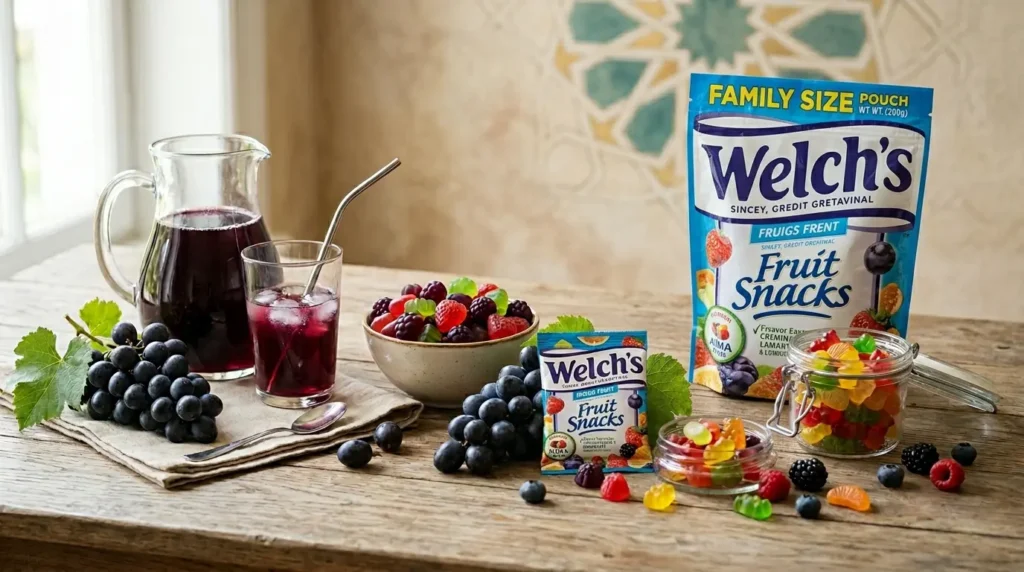
Is Welch’s Fruit Halal? A Complete and Detailed Guide
For many Muslims today, eating halal is no longer as simple as avoiding obvious sources like pork or alcohol. Modern food production has introduced layers of complexity—additives, stabilizers, flavorings, and processing methods that are not always transparent.
This is why a simple question like “Is Welch’s fruit halal?” deserves a detailed answer.
Welch’s is one of the most recognizable fruit-based brands in the world. Its products are marketed as natural, fruit-forward, and family-friendly. However, when examined through the lens of halal dietary laws, the answer is not straightforward.
Some products are clearly permissible. Others are clearly not. And a few fall into a grey area that requires careful consideration.
This guide is designed to give you clarity—not just a yes or no answer, but a complete understanding of what you are consuming and why it matters.
Why This Question Matters More Than It Seems
At first glance, fruit snacks and juices appear harmless. After all, fruit itself is halal. But processed food is rarely just fruit.
Behind the label, you may find:
- Animal-derived ingredients
- Chemically processed additives
- Flavor carriers that may contain alcohol
- Coloring agents derived from insects
The reality is that modern food products often combine ingredients from multiple sources, making it difficult to determine their halal status without deeper investigation.
That is exactly the case with Welch’s.
Understanding the Foundations of Halal Food
Before analyzing specific products, it is important to understand the framework used to classify food in Islam.
Core Principles
A food is halal if it meets the following conditions:
- It does not contain pork or pork derivatives
- It does not include intoxicating substances such as alcohol
- Any animal-derived ingredient comes from a halal-slaughtered animal
- It is not contaminated with haram substances during processing
Three Key Categories
Islamic scholars generally divide food into:
- Halal (permissible)
- Haram (forbidden)
- Mashbooh (doubtful)
The third category is particularly important when discussing processed foods. When the source of an ingredient is unclear, many scholars recommend avoiding it as a precaution.
Related post : Are Pop-Tarts Halal?
A Closer Look at Welch’s Product Categories
Welch’s produces several types of products, each with different ingredients and processing methods:
- Fruit snacks (gummy-style candies)
- 100% fruit juices
- Juice blends and cocktails
- Jams, jellies, and spreads
To determine whether Welch’s is halal, each category must be evaluated individually.
Are Welch’s Fruit Snacks Halal? A Deep Analysis
The Central Issue: Gelatin
The most significant concern with Welch’s fruit snacks is gelatin. This ingredient is responsible for the chewy texture that makes gummies appealing.
What Is Gelatin Really?
Gelatin is derived from collagen, which is extracted from animal bones, skin, and connective tissue. It is not a plant-based ingredient, even though it is commonly found in fruit-flavored products.
Why the Source Matters
From a halal perspective, the source of gelatin determines its permissibility:
- If derived from pork, it is unquestionably haram
- If derived from cattle not slaughtered according to Islamic law, it is also considered haram
- If derived from halal-slaughtered animals, it is permissible
The issue with Welch’s is that the company does not publicly confirm that its gelatin is sourced from halal-certified animals.
The Problem of Transparency
In halal dietary practice, certainty is crucial. When a company does not clearly disclose the origin of an ingredient, the product often falls into the doubtful category.
For many Muslims, doubtful is not good enough.
This lack of transparency is one of the main reasons why Welch’s fruit snacks are widely considered non-halal.
Scholarly Debate: Does Processing Change the Ruling?
There is an ongoing debate among scholars regarding whether gelatin undergoes a transformation that changes its ruling.
Majority Position
Most scholars maintain that gelatin retains its original ruling. If it comes from a haram source, it remains haram regardless of processing.
Minority Position
Some scholars argue that the chemical transformation of gelatin removes its original properties, making it permissible.
However, this view is not widely adopted and is often considered less cautious.
Practical Ruling
Given:
- The unknown source of gelatin
- The absence of halal certification
- The majority scholarly opinion
The safest and most widely accepted conclusion is:
Welch’s fruit snacks should be avoided by Muslims seeking halal compliance.
Are Welch’s Juices Halal? A Detailed Evaluation
Compared to fruit snacks, juices are much simpler in composition.
Typical Ingredients
Most Welch’s juices contain:
- Fruit juice from concentrate
- Water
- Natural flavors
- Vitamin C
These ingredients are generally plant-based and do not raise major concerns.
The Alcohol Question
Because Welch’s is strongly associated with grapes, some people worry about fermentation.
It is important to understand:
- Fresh or pasteurized juice is halal
- Alcohol only forms when sugar ferments over time
Welch’s juices are processed to prevent fermentation, meaning they do not contain intoxicating alcohol.
Potential Areas of Concern
While generally safe, a cautious consumer may still consider:
- Flavoring agents that may use alcohol as a solvent
- Regional ingredient variations
However, these concerns are minimal and do not typically affect the halal status.
Conclusion on Juices
Welch’s juices are generally considered halal and permissible.
Are Welch’s Jams and Jellies Halal?
Jams and jellies are often misunderstood, but they are usually one of the safest categories.
Why They Are Different
Unlike gummies, jams use pectin instead of gelatin.
What Is Pectin?
Pectin is a natural carbohydrate found in fruits. It is extracted from plant sources and used as a thickening agent.
Because it is plant-based, it is considered halal.
Ingredient Simplicity
Most jams contain:
- Fruit
- Sugar
- Pectin
- Citric acid
These ingredients are straightforward and widely accepted as halal.
Conclusion on Jams
Welch’s jams and jellies are halal and safe to consume.
Related post : Is Jollibee Halal or Haram?
The Role of Halal Certification
One of the biggest gaps with Welch’s is the lack of widespread halal certification.
Why Certification Matters
Halal certification provides:
- Assurance about ingredient sourcing
- Verification of production processes
- Protection against cross-contamination
Without certification, consumers must rely on their own research.
Hidden Ingredients That Can Change the Ruling
Even when a product appears harmless, hidden ingredients can affect its halal status.
Ingredients to Be Careful About
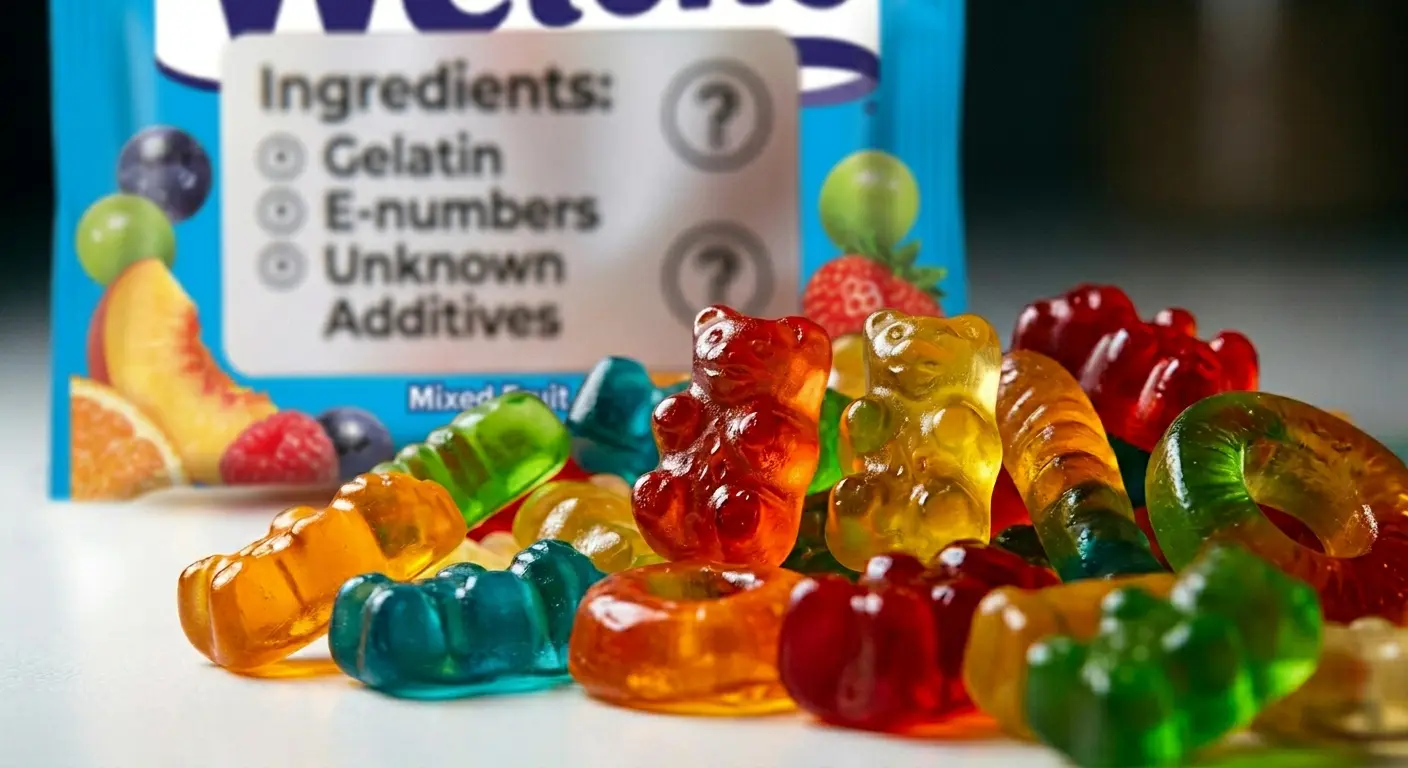
- Gelatin
- Carmine (a red coloring derived from insects)
- Mono- and diglycerides
- Artificial flavor carriers
Why These Matter
These ingredients often come from mixed or unclear sources, making them difficult to classify without detailed information.
A Smarter Approach to Halal Eating
Rather than memorizing specific brands, it is more effective to develop a system for evaluating food.
A Practical Method
- Check the ingredient list
- Identify any animal-derived components
- Look for halal certification
- Research unclear ingredients
- Avoid doubtful products when necessary
This approach works for any product, not just those from Welch’s.
Frequently Asked Questions
Is Welch’s grape juice halal?
Yes, it is halal because it is not fermented.
Are Welch’s fruit snacks halal?
No, due to gelatin concerns.
Is Welch’s jelly halal?
Yes, because it uses pectin.
Can Muslims consume Welch’s products?
Yes, but only specific categories such as juices and jams.
Final Verdict
After analyzing ingredients, production methods, and scholarly opinions, the conclusion is clear:
- Fruit snacks are not halal due to gelatin
- Juices are halal
- Jams and jellies are halal
Conclusion
The question “Is Welch’s fruit halal?” cannot be answered with a simple yes or no. It requires understanding ingredients, sourcing, and Islamic dietary principles.
While Welch’s offers many fruit-based products, not all of them meet halal standards. The responsibility ultimately falls on the consumer to make informed decisions.
In a world where food production is increasingly complex, knowledge is essential. By understanding what goes into your food, you can maintain your dietary values with confidence and clarity.
