
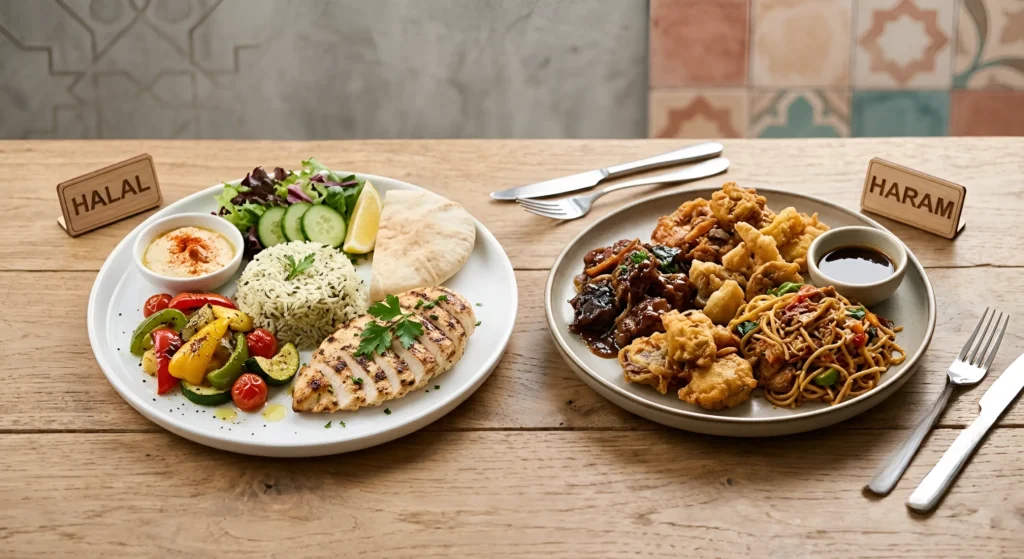
Is Naya Halal or Haram? The Truth Every Muslim Should Know
In a world where new foods, brands, and fusion dishes appear almost every day, Muslims often face one recurring question:
“Is this halal or haram?”
Recently, one such query gaining attention is:
Is Naya halal or haram?
At first glance, it sounds like a simple yes-or-no matter. But if you want a real, honest, and Islamically correct answer, you need to go deeper than just the name.
Because here’s the truth most people miss:
Islam does not judge food by its name — it judges it by its ingredients, source, and impact.
So let’s break this down properly.
What Is “Naya” Food, Really?
Before deciding whether something is halal or haram, we must understand what it actually is.
The word “Naya” literally means:
- New
- Modern
- Recently introduced
It is not a classical or globally standardized dish like pizza, biryani, or sushi.
Instead, “Naya” may refer to:
- A newly introduced dish
- A branded food product
- A modern or fusion recipe
- A restaurant item with a unique name
This leads to one unavoidable conclusion:
There is no single fixed recipe for “Naya.”
And that completely changes how we approach its ruling.
Why You Can’t Give a One-Line Answer
If someone tells you:
- “Naya is halal”
or - “Naya is haram”
Without asking what’s inside it, they’re oversimplifying — and that’s not how Islamic rulings work.
Because:
A food’s ruling depends on what it contains, not what it’s called.
The Golden Rule in Islam About Food
Islam gives us a very clear and powerful principle:
“All food is halal unless there is evidence that it is haram.”
This means:
- You don’t assume things are forbidden
- But you also don’t ignore clear red flags
This balance is what makes Islamic dietary law practical and timeless.
What Makes a Food Halal?
A dish — whether it’s called Naya or anything else — is halal if:
1. It Contains No Haram Ingredients
Such as:
- Pork or pork derivatives
- Alcohol or intoxicants
2. Meat Is Properly Slaughtered
If the dish includes:
- Chicken
- Beef
- Lamb
It must be:
- Slaughtered in the name of Allah
- Processed according to Islamic guidelines
3. It Is Free From Contamination
Even halal ingredients can become problematic if:
- Cooked with haram items
- Prepared using shared equipment
What Makes a Food Haram?
A food becomes haram if it includes any of the following:
1. Pork in Any Form
This includes hidden ingredients like:
- Gelatin
- Lard
- Flavor extracts
2. Alcohol (Even in Small Amounts)
Used in:
- Sauces
- Desserts
- Flavoring
3. Non-Halal Meat
If the animal:
- Was not slaughtered Islamically
- Was dead before slaughter
4. Harmful Substances
Islam also prohibits consuming things that:
- Damage the body
- Cause harm over time
Is Naya Halal or Haram? (Clear Answer)
Now let’s answer the main question directly:
“Naya” itself is neither halal nor haram.
Instead:
- If its ingredients are halal → It is halal
- If its ingredients are haram → It is haram
- If its ingredients are unclear → It is doubtful (mashbooh)
Real-Life Scenarios You Might Face
Let’s make this practical so you can apply it in real life.
Scenario 1: Naya Is a Simple Vegetarian Dish
If it includes:
- Rice
- Vegetables
- Spices
- Oils
Then it is halal, as long as:
- No alcohol is used
- No contamination occurs
Scenario 2: Naya Contains Meat
Now things get serious.
Ask:
- Where did the meat come from?
- Was it halal slaughtered?
If yes → halal
If no → haram
Scenario 3: Naya Is a Processed or Packaged Food
This is where many people slip.
Check for:
- Gelatin
- Emulsifiers
- Flavor enhancers
- E-numbers
If the source is unknown → doubtful
Scenario 4: Naya Is a Restaurant or Fusion Dish
Restaurants often:
- Mix ingredients
- Use shared equipment
- Add sauces with hidden alcohol
Always verify before consuming
The Hidden Danger: Modern Ingredients
Today’s food industry is complex.
Many ingredients:
- Have scientific names
- Come from mixed sources
- Are not clearly labeled
For example:
- Gelatin can be halal or haram
- Enzymes can be plant-based or animal-based
- Flavorings may contain alcohol
This is why blind trust is risky.
Related post : Halal Bites UK
Islam’s Approach to Doubtful Food
There is a powerful guideline in Islam:
“Leave what causes doubt for what does not.”
This means:
- If you’re unsure → avoid it
- If you’re confident → consume it
It’s not about being extreme — it’s about being careful.
Why This Matters More Than You Think
Eating halal isn’t just about diet.
It affects:
- Your spiritual state
- Your عبادات (worship)
- Your mindset
There is a deep connection between:
What you consume and who you become
Common Mistakes People Make
Let’s be honest — many people get this wrong.
Mistake 1: Judging by Name
Just because it’s called “Naya” doesn’t mean anything.
Mistake 2: Following the Crowd
“Everyone is eating it” is not a valid reason.
Mistake 3: Ignoring Ingredients
This is the biggest issue today.
Mistake 4: Assuming “Modern = Halal”
New doesn’t mean permissible.
How to Make the Right Decision Every Time
Here’s a simple system you can follow:
Step 1: Identify Ingredients
Always start here.
Step 2: Check the Source
Especially for:
- Meat
- Additives
Step 3: Look for Certification
Halal certification adds confidence.
Step 4: When in Doubt, Leave It
This protects your faith.
Related post : Is Hibachi Halal?
What Should You Do If You Already Ate It?
If you consumed Naya without knowing:
There is no sin on you
Islam judges based on:
- Knowledge
- Intention
Just be more careful moving forward.
A Balanced Islamic Perspective
Islam is not meant to make life difficult.
It does not say:
- Question everything obsessively
- Live in constant doubt
But it also does not allow:
- Carelessness
- Blind consumption
The goal is balance.
Final Verdict (Honest and Clear)
Let’s end the confusion:
“Naya” is not automatically halal or haram.
The ruling depends on:
- Ingredients
- Preparation
- Source
Best Practice:
- Choose clearly halal food
- Avoid doubtful items
- Stay away from haram
Conclusion: The Smarter Way to Eat Halal
The question “Is Naya halal or haram?” is actually a reminder of something bigger:
In today’s world, awareness matters more than ever.
Instead of focusing on names:
- Focus on ingredients
- Focus on knowledge
- Focus on conscious choices
Because at the end of the day:
Halal is not just what you eat — it’s how carefully you choose it.
