
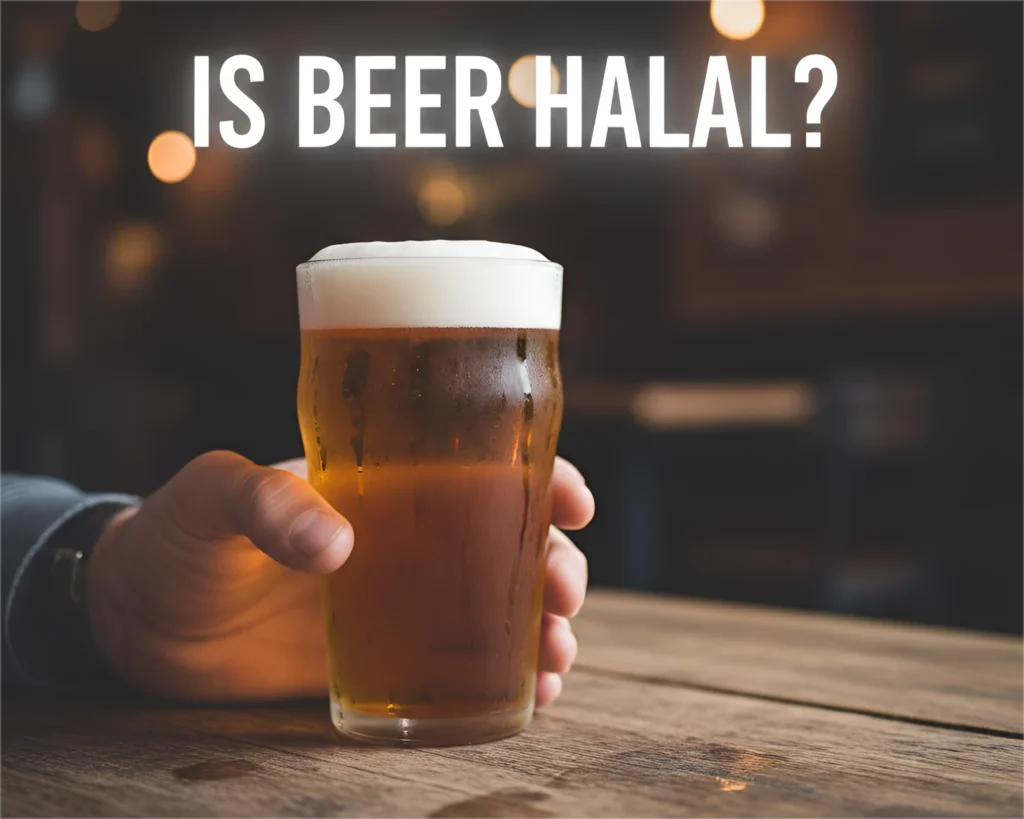
For many Muslims, the question “Is beer halal?” isn’t just a random curiosity—it’s something that comes up at dinners, at restaurants, at work events, or during travel. In a world where alcohol is common in social settings, it’s natural to wonder where beer fits in and what Islam actually says about it.
The short answer is simple: regular beer is not halal because it contains alcohol.
But the longer answer—especially when it comes to non-alcoholic beer, cultural norms, personal choices, and Islamic reasoning—is more nuanced. So let’s explore this topic with clarity and a human touch, without judgment or confusion.
What Does “Halal” Really Mean?
In everyday conversation, people often think “halal” just means “permissible food.” But its meaning is much broader—halal refers to anything that is allowed in Islam.
When it comes to food and drink, halal is mainly about two things:
- Ingredients—Is the substance itself permissible?
- Effects—Does it harm the body or mind?
Alcohol falls under both categories: it’s a prohibited ingredient and an intoxicant, which is why Muslims are told to avoid it.
So What Exactly Is Beer?
Beer is a drink made from fermented grains—usually barley or wheat—mixed with yeast and water. During fermentation, the yeast converts sugars into alcohol, which gives beer its intoxicating effect.
This means that even a small amount of regular beer contains enough alcohol to make it clearly forbidden in Islam.
But there’s a twist: many modern grocery stores now sell non-alcoholic beer or “alcohol-free beer,” which has led to more questions about whether those versions are halal.
Before we get into that, let’s first look at what the Quran and Islamic teachings say.
What the Quran Says About Alcohol
Islam’s stance on alcohol isn’t vague. The Quran addresses intoxicants multiple times, and the message becomes clearer and stricter throughout its revelation.
A few key verses help explain why alcohol is prohibited:
- Quran 5:90 calls intoxicants “an abomination” and tells believers to avoid them.
- Quran 2:219 acknowledges that alcohol has some benefits, but says its harm outweighs the good.
Taken together, Islamic scholars universally agree that any intoxicating drink is haram. Since beer is designed to intoxicate (and usually does), it falls under this category.
But what about small amounts?
What if someone drinks it but doesn’t get drunk?
Islamic teachings respond to this clearly:
“Whatever intoxicates in large amounts is prohibited even in small amounts.”
This hadith makes it clear that even a sip of an intoxicating beverage is not allowed.
Why Islam Prohibits Alcohol (Beyond Just the Rules)
It’s easy to look at Islamic rulings as rigid rules, but they’re rooted in wisdom. Alcohol affects people in ways that can lead to:
- impaired judgment
- health problems
- addiction
- social issues
- emotional volatility
- risky behavior
From an Islamic perspective, anything that interferes with the mind—the tool we use to think, pray, reflect, and make good decisions—is something to avoid.
So the prohibition isn’t meant to restrict enjoyment—it’s meant to preserve well-being.
The Big Question: What About Non-Alcoholic Beer?
This is where things get interesting. Non-alcoholic beer is marketed as a “safer” or more inclusive option. But is it halal?
Here’s what you need to know:
Most non-alcoholic beer contains a small amount of alcohol
Usually between 0.0% to 0.5%. That might sound tiny, but it’s not zero—meaning some Muslims choose to avoid it for that reason alone.
It’s brewed like regular beer
It goes through fermentation first, which creates alcohol, and then the alcohol is removed. Some Muslims dislike this process, feeling it’s still connected to something haram.
Taste and resemblance matter
Some scholars say that anything that tastes or looks exactly like beer could open the door to confusion or imitation, even if it’s technically non-alcoholic.
Scholars disagree, respectfully
- Some say any alcohol at all makes it haram.
- Others say that if it cannot intoxicate, and the alcohol content is negligible, it can be halal.
This is why you’ll find Muslims with different personal choices on the matter—and that’s okay.
The safest approach?
If a drink says 0.0% alcohol, it’s generally accepted as halal by many scholars. If it says 0.5% or less, opinions differ.
The Role of Intention (Niyyah)
Islam puts a lot of weight on intention. If someone knowingly drinks something intoxicating, the ruling is clear. But if someone accidentally consumes a trace amount of alcohol in otherwise halal food (like vinegar or kombucha), it’s not the same.
Still, intention doesn’t make beer halal—it just helps distinguish innocent mistakes from deliberate choices.
Cultural Realities: Muslims and Beer
Muslims live all over the world, and cultural environments affect how often these questions come up.
In Muslim-majority countries
- Alcohol may be restricted or banned by law.
- Drinking culture is minimal or hidden.
In Western countries
- Beer is everywhere—restaurants, offices, family events, even airport lounges.
- Muslims may feel pressured or awkward declining drinks.
This can cause people to wonder if “just a little” beer is okay, especially in professional settings. But from an Islamic standpoint, the rule remains: if it’s intoxicating, it’s off-limits.
Halal Alternatives to Beer
If someone enjoys the social or aesthetic side of drinking beer—but not the alcohol—there are many alternatives:
Non-alcoholic beers with verified 0.0% alcohol
Some brands truly contain no alcohol. Always check labels.
Malt drinks (non-fermented)
These have no alcohol production involved.
Sparkling fruit or herbal drinks
These often feel just as festive.
Specialty halal beverages
Some countries produce certified halal drinks as alternatives to beer and wine.
Muslims don’t have to miss out on gatherings or celebrations—there are plenty of halal-friendly options.
What Scholars Say—In Simple Words
Islamic scholars across all four major schools (Hanafi, Shafi’i, Maliki, Hanbali) agree that:
- Beer with alcohol is haram.
- Any drink that can intoxicate is haram.
- Any amount of an intoxicating drink is haram, even if it doesn’t cause intoxication in small quantities.
On non-alcoholic beer:
- Some scholars allow it IF it truly contains 0.0% alcohol and cannot intoxicate.
- Others recommend avoiding it altogether to stay on the safe side.
The differing opinions show that Islam has room for personal conscience on non-intoxicating beverages.
Practical Tips for Muslims
If you’re trying to make the best choice while staying true to your faith, here are some friendly guidelines:
- Avoid regular beer entirely — this one is clear-cut.
- Check alcohol content on labels—look for “0.0%.”
- Ask trustworthy scholars or your mosque for guidance if unsure.
- Avoid drinks that resemble beer if you personally feel uncomfortable.
- Choose alternatives that make you feel confident and at ease.
At the end of the day, Islam encourages clarity, not confusion.
Final Thoughts: So, Is Beer Halal?
When it comes down to it, the answer is straightforward:
- Regular beer is haram because it contains alcohol and intoxicates.
- Non-alcoholic beer is debated, and permissibility often depends on whether it truly contains zero alcohol and on personal conviction.
Islam’s approach to alcohol isn’t about restricting enjoyment—it’s about protecting health, clarity, dignity, and social well-being.And the beauty of Islam is that it gives people room to make educated, thoughtful decisions while maintaining faith and integrity.If you choose to avoid all forms of beer, that’s a safe and respected choice. If you choose to drink only verified 0.0% non-alcoholic options, many scholars permit that.Either way, what matters is sincerity, understanding, and a desire to stay aligned with your values.
For more like this visit : Hilalinfohub
