
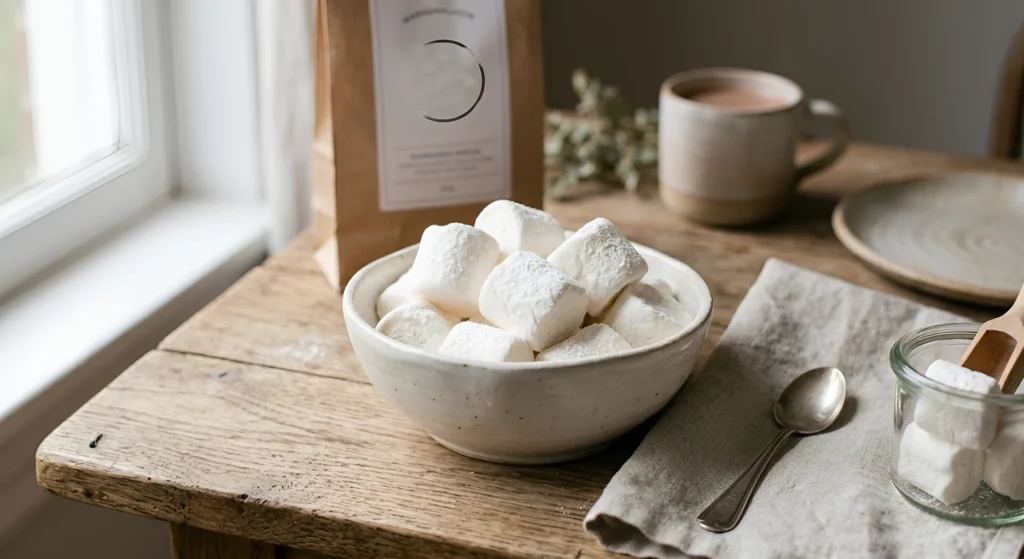
Marshmallows are a popular sweet treat in the United States, commonly enjoyed in hot chocolate, desserts, and traditional campfire snacks like s’mores. However, for Muslim consumers, an important question arises before consuming them: Are marshmallows halal in the U.S.?
The answer is not straightforward. While marshmallows may appear to be simple sugar-based confections, their ingredients often include elements that are not permissible under Islamic dietary laws. This comprehensive guide explains everything you need to know, including ingredients, halal concerns, safe alternatives, and how to make informed choices.
Understanding Halal Food Requirements
In Islam, halal refers to what is permissible according to Islamic law. For food to be considered halal, it must meet specific criteria:
- It must not contain pork or pork-derived ingredients
- It must not include alcohol or intoxicants
- Animal-derived ingredients must come from animals slaughtered according to Islamic guidelines
- It must not be contaminated with non-halal substances during processing
If any of these conditions are violated, the food becomes haram (forbidden).
The Key Ingredient: Gelatin
The primary factor that determines whether marshmallows are halal is gelatin.
What Is Gelatin?
Gelatin is a protein derived from collagen, typically extracted from animal parts such as skin, bones, and connective tissues. It is used in marshmallows to create their soft and elastic texture.
Common Sources of Gelatin
In the United States, gelatin is usually derived from:
- Pig skin
- Cow bones and hides
- Fish (less commonly)
Why Gelatin Raises Halal Concerns
The source of gelatin is critical in determining whether marshmallows are halal.
- Gelatin derived from pigs is strictly haram
- Gelatin derived from cattle is only halal if the animal was slaughtered according to Islamic law
- Gelatin derived from fish is generally considered halal
- Plant-based alternatives are fully halal
Because most marshmallows in the U.S. use pork-based gelatin, they are typically not permissible for Muslim consumers.
Are Marshmallows in the U.S. Halal?
General Market Reality
Most commercially produced marshmallows in the United States are not halal. This is primarily due to the widespread use of pork-derived gelatin and the lack of clear labeling regarding its source.
In many cases, ingredient lists simply mention “gelatin” without specifying whether it is derived from pork, beef, or fish. This lack of transparency makes it difficult for consumers to verify halal compliance.
Comparison Table: Marshmallow Types and Halal Status
| Marshmallow Type | Gelatin Source | Halal Status | Recommendation |
|---|---|---|---|
| Standard U.S. Brands | Pork (common) | Not Halal | Avoid |
| Unspecified Gelatin | Unknown | Doubtful | Avoid |
| Halal-Certified | Halal beef | Halal | Safe |
| Vegan Marshmallows | No gelatin | Halal | Best option |
| Fish Gelatin Products | Fish-based | Halal | Acceptable |
Related post : Halal Bites in the U.S. 2026
Why Most Marshmallows Are Not Halal
1. Widespread Use of Pork Gelatin
Pork gelatin is widely used in the U.S. because it is inexpensive and efficient for large-scale production. This makes it the default choice for many manufacturers.
2. Lack of Ingredient Transparency
Manufacturers often do not disclose the source of gelatin, leaving consumers uncertain about whether the product is halal.
3. Absence of Mandatory Halal Certification
Unlike in many Muslim-majority countries, halal certification is not required in the United States. As a result, many products are sold without verification of their halal status.
4. Risk of Cross-Contamination
Even if a product appears halal, it may be produced in facilities that also process non-halal items, increasing the risk of contamination.
When Are Marshmallows Halal?
Marshmallows are considered halal only under specific conditions:
Halal-Certified Gelatin
The gelatin must come from animals that have been slaughtered according to Islamic guidelines and verified by a recognized certification authority.
Fish-Based Gelatin
Gelatin derived from fish is generally considered permissible.
Plant-Based Alternatives
Marshmallows made without animal-derived gelatin are fully halal and widely accepted.
Vegan Marshmallows: The Safest Option
Vegan marshmallows are increasingly available and are considered the safest choice for Muslim consumers.
Why Vegan Marshmallows Are Recommended
- They contain no animal-derived ingredients
- They eliminate concerns about slaughter methods
- They are widely accessible in stores and online
Common Ingredients Used
Instead of gelatin, vegan marshmallows use plant-based substitutes such as:
- Agar-agar
- Carrageenan
- Pectin
These ingredients provide the same texture without violating halal principles.
Are Kosher Marshmallows Halal?
Kosher certification does not automatically mean halal compliance.
Related post : Difference Between Halal and Kosher
Key Differences
Kosher marshmallows may contain:
- Fish gelatin, which is generally halal
- Beef gelatin, which may not meet halal slaughter requirements
For this reason, kosher products should not be assumed halal without further verification.
How to Identify Halal Marshmallows
To ensure a product is halal, follow these steps:
1. Read the Ingredient Label Carefully
Look for clear indications such as:
- Halal-certified gelatin
- Plant-based or vegan labeling
2. Look for Certification Marks
Products certified by recognized halal authorities are more reliable.
3. Avoid Unclear Ingredients
If the source of gelatin is not specified, it is best to avoid the product.
4. Choose Plant-Based Products
Vegan marshmallows eliminate uncertainty and are the safest option.
Availability of Halal Marshmallows in the U.S.
Halal and vegan marshmallows are becoming more accessible due to increasing demand. They can typically be found in:
- Halal grocery stores
- Specialty food shops
- Health-focused supermarkets
- Online marketplaces
Making Halal Marshmallows at Home
Preparing marshmallows at home is another reliable option.
Benefits of Homemade Marshmallows
- Full control over ingredients
- Guaranteed halal compliance
- No risk of cross-contamination
Basic Ingredients
- Halal-certified gelatin or plant-based alternative
- Sugar
- Corn syrup
- Flavoring
Homemade marshmallows can be customized and often provide better quality and taste.
Common Misconceptions
“Marshmallows Are Just Sugar”
Marshmallows contain gelatin, which is an animal-derived ingredient and a key concern.
“Unlabeled Means Safe”
If the source of gelatin is not specified, the product should be considered doubtful.
“Kosher Means Halal”
Kosher standards differ from halal requirements and are not interchangeable.
Key Takeaways
- Most marshmallows in the U.S. are not halal due to pork-derived gelatin
- Halal-certified and vegan marshmallows are safe alternatives
- Gelatin source determines permissibility
- Clear labeling and certification are essential
- When in doubt, choose plant-based options
Frequently Asked Questions (FAQs)
Are marshmallows halal in the United States?
Most marshmallows are not halal because they typically contain pork-derived gelatin. However, halal-certified and vegan options are available.
Is all gelatin haram?
No. Gelatin is halal if it comes from halal-slaughtered animals, fish, or plant-based sources.
Can Muslims eat regular marshmallows?
Generally, no. Most regular marshmallows in the U.S. are made with pork gelatin.
Are vegan marshmallows halal?
Yes. They contain no animal-derived ingredients and are considered fully halal.
How can I check if marshmallows are halal?
Check the ingredient list, look for halal certification, and ensure the gelatin source is clearly identified.
Are kosher marshmallows halal?
Not necessarily. Some may be halal if they use fish gelatin, but others may not meet halal standards.
What is the safest type of marshmallow?
Vegan marshmallows are the safest option because they eliminate all animal-related concerns.
Can gelatin become halal after processing?
There is scholarly debate, but the majority opinion is to avoid gelatin derived from non-halal sources.
Are homemade marshmallows halal?
Yes, as long as you use halal-certified or plant-based ingredients.
Why is gelatin used in marshmallows?
Gelatin provides the soft, elastic texture that defines marshmallows.
Final Verdict
Most marshmallows in the United States are not halal due to the use of pork-derived gelatin and lack of transparency in labeling. However, Muslim consumers are not without options.
Halal-certified marshmallows and plant-based alternatives provide safe and accessible choices. By reading labels carefully and choosing verified products, it is entirely possible to enjoy marshmallows without compromising Islamic dietary principles.
