
Introduction
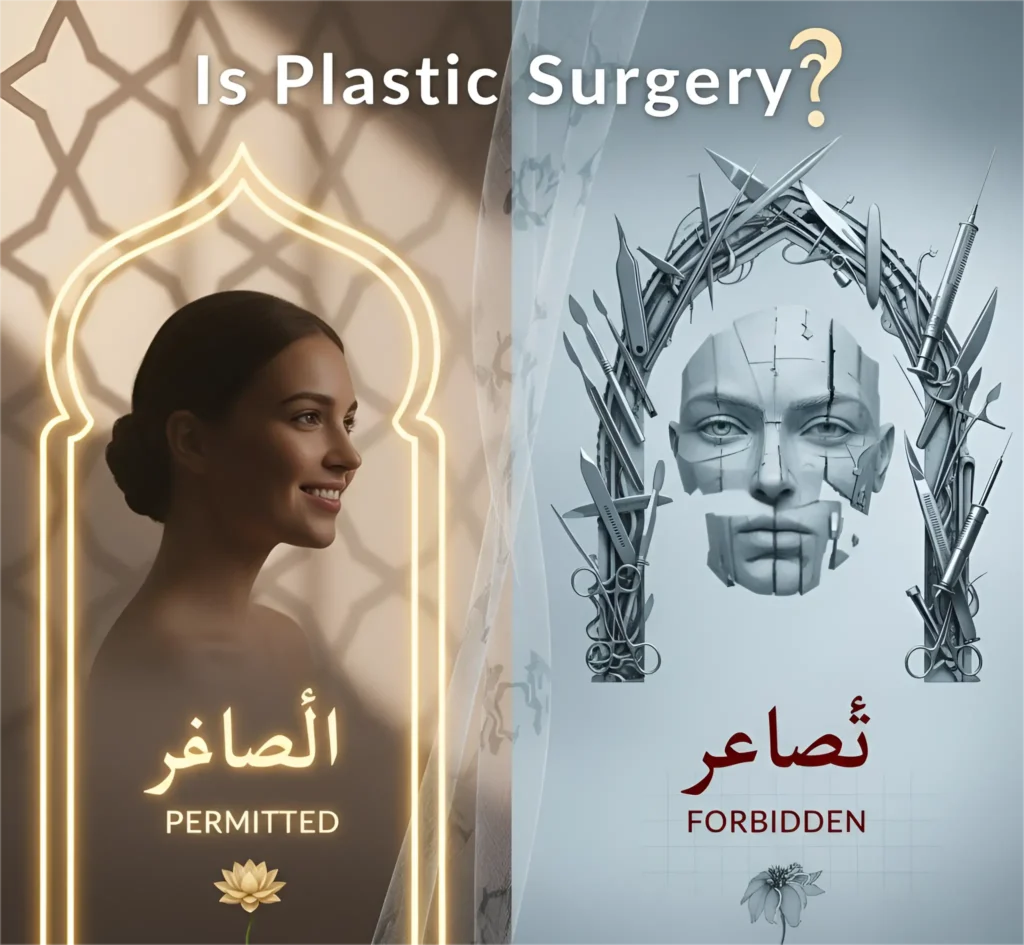
Plastic surgery has become incredibly popular in recent years. From nose reshaping and lip fillers to reconstructive procedures after accidents, the world of cosmetic enhancement is larger than ever. As Muslims, many of us wonder: Is plastic surgery halal? Or does it fall into the category of haram modifications to the body?
This question doesn’t have a one-sentence answer. Islam looks at intentions, reasons, risks, and the nature of the procedure itself. In this guide, we’ll explore the Islamic ruling on plastic surgery in a clear, balanced, and human way—so you can understand what is allowed and what is not.
What Does Islam Say About Changing the Creation of Allah?
One of the biggest concerns Muslims have about cosmetic surgery comes from the verse in the Qur’an where Shaytan says:
“And I will command them so they will change the creation of Allah.” (Qur’an 4:119)
Many scholars interpret unnecessary bodily changes as something discouraged or prohibited, especially if done purely out of dissatisfaction, imitation, or vanity.
However, this does NOT mean all forms of body alteration are forbidden. Islam allows certain changes when they serve a legitimate purpose.
For example:
- Cutting nails
- Removing hair
- Medical treatments
- Correcting deformities
- Healing injuries
So the ruling on plastic surgery isn’t black and white—it depends on why and how it is done.
Two Types of Plastic Surgery in Islam
To understand whether plastic surgery is halal, scholars divide it into two main categories:
Reconstructive Plastic Surgery — Allowed (Halal)
This type of surgery is performed to restore normal appearance or function due to:
- Birth defects
- Burns
- Accidents
- Medical conditions
- Physical deformities
- Trauma
- Cleft lip
- Tumors
- Facial paralysis
Scholars are in agreement that reconstructive surgery is halal, because its purpose is to:
- Remove harm
- Restore normal function
- Heal psychological trauma
- Help someone live a normal life
Prophet Muhammad ﷺ even allowed a man whose nose was severed in battle to replace it with a prosthetic nose made of silver. This hadith is often quoted to support the permissibility of necessary reconstructive surgery.
Why It’s Halal:
- It removes hardship
- It restores natural appearance
- It doesn’t involve unnecessary beautification
- It improves quality of life
In short, if the goal is healing, not beautifying, the surgery is generally allowed.
Cosmetic Surgery for Beautification — Usually Haram
This includes procedures done only to improve appearance, such as:
- Lip fillers
- Botox for appearance
- Facelifts
- BBL (Brazilian Butt Lift)
- Breast enlargement/reduction for beauty
- Rhinoplasty purely for aesthetics
- Jawline sculpting
- Cosmetic implants
Most scholars consider these surgeries haram, because they involve:
- Changing the creation of Allah
- Excessive vanity
- Imitating celebrities
- Risking health for beauty
- Making permanent changes without medical need
Why It Is Often Haram:
- The intention is purely beautification
- It can lead to body dissatisfaction
- It aligns with unhealthy societal pressure
- It falls under altering Allah’s creation without necessity
- It involves serious medical risks
Many scholars also mention the harm involved—anesthesia, infections, complications—because Islam forbids unnecessary harm to the body.
But Is Cosmetic Surgery Always Haram?
Not necessarily.
Islam doesn’t prohibit something simply because it improves appearance. For example:
- Perfume is allowed
- Wearing beautiful clothes is allowed
- Grooming and cleanliness are encouraged
So where is the line?
Islam differentiates between enhancing your natural beauty vs changing your body structure.
Let’s break it down:
Allowed Cosmetic Enhancements:
- Teeth whitening
- Skin treatment for acne
- Laser hair removal
- Scar removal
- Correcting minor deformities
- Non-permanent fillers (depending on ingredients)
Forbidden Enhancements:
- Permanent changes to body structure
- Surgeries that imitate others
- Procedures driven by vanity, desire for attention, or insecurity
Intent plays a big role. Two people can do the same procedure—but the ruling may be different based on why they are doing it.
Understanding Intent (Niyyah) in Plastic Surgery
Islam places heavy emphasis on intention.
Here are two scenarios:
Scenario 1:
A woman has a nose injury from childhood that makes breathing difficult and also affects her appearance.
→ Surgery is permitted, because it corrects a defect and improves health.
Scenario 2:
A woman wants a smaller nose because she doesn’t like its shape and wants to look like a celebrity.
→ Surgery is not permitted, because the intention is pure beautification.
The same surgery—two different rulings.
What About Psychological Reasons?
This is where things get sensitive.
Many people seek cosmetic surgery because they feel insecure, depressed, or socially pressured. Islam recognizes emotional well-being and mental health.
Some scholars allow surgery when:
- The person suffers deep emotional distress
- The deformity causes bullying or humiliation
- It impacts marriage or social life
- The procedure restores normalcy, not luxury
In such cases, the surgery isn’t viewed as vanity but as a medical need.
However, this requires:
- Honest self-reflection
- Consulting a trustworthy doctor
- Consulting a qualified scholar
Not all insecurities justify surgery, but some truly do.
Islamic Scholars’ Opinions on Plastic Surgery
Although scholars differ in some details, the general consensus is:
1. Reconstructive surgery is halal.
There is near-unanimous agreement on this.
2. Beautification surgery is usually haram.
Unless there is a valid reason, it’s seen as altering Allah’s creation without necessity.
3. Non-surgical aesthetic treatments are allowed if they:
- Are temporary
- Do not cause harm
- Do not imitate immoral trends
- Do not permanently alter the body
4. Major surgeries purely for beauty (like BBL or implants)
→ Most scholars consider them strongly forbidden due to high risk and unnecessary alteration.
Medical Risks (A Factor in Islamic Ruling)
Islam prohibits bringing harm to oneself. The Prophet ﷺ said:
“There should be neither harming nor reciprocating harm.”
Plastic surgery—especially cosmetic procedures—comes with:
- Anesthesia risks
- Infections
- Scarring
- Loss of sensation
- Repeated surgeries
- BBL has one of the highest mortality rates
- Psychological side effects
- Body dysmorphia
If a surgery endangers life or health without medical need, it becomes impermissible.
Social Pressure & Beauty Standards in Islam
We live in a world filled with unrealistic beauty standards. Social media filters, celebrity culture, and constant comparison make many people feel inadequate.
Islam teaches:
- Contentment with Allah’s creation
- Gratitude for our bodies
- Avoiding unnecessary risks
- Modesty and self-respect
- Inner beauty and character
Cosmetic surgery driven by pressure to look “perfect” goes against these principles.
A believer is encouraged to accept their natural beauty, improve their confidence, and focus on character and faith.
When Plastic Surgery Becomes Haram
Plastic surgery becomes forbidden when:
- It changes Allah’s creation without valid reason
- It is motivated by vanity or imitation
- It involves risk without necessity
- It wastes money excessively
- It makes you look like another person
- It requires exposure of private parts unnecessarily
- It stems from dissatisfaction with Allah’s decree
When Plastic Surgery May Be Halal
Plastic surgery may be permissible when:
- It restores a natural appearance
- It treats deformity or injury
- It reduces emotional suffering
- It improves essential body function
- It removes harm or defect
- It is not excessively risky
- It brings the person back to a normal state, not beyond it
The key is whether the procedure is restorative or enhancing.
Practical Advice for Muslims Considering Plastic Surgery
If you’re thinking about plastic surgery, here are some steps:
1. Ask yourself: Why do I want this?
Is it insecurity? Pressure? Vanity? Or real harm?
2. Consult a qualified Islamic scholar.
A personal situation may change the ruling.
3. Speak to a medical professional.
Know the risks and long-term effects.
4. Consider psychological help first.
Sometimes therapy helps more than surgery.
5. Strengthen your gratitude and body acceptance.
Islam teaches us to appreciate the unique way Allah created us.
Final Answer: Is Plastic Surgery Halal?
Halal if:
- It’s reconstructive
- It treats defects
- It restores normal function
- It removes harm
- It is safe and medically necessary
Haram if:
- It’s purely for beauty
- It changes Allah’s creation unnecessarily
- It imitates trends or celebrities
- It involves significant risk
- It comes from vanity or dissatisfaction
Final Thought
Islam does not forbid beauty—Islam forbids excess, harm, and vanity. Your body is a gift from Allah, and your worth is far more than your appearance.
If you are considering plastic surgery, approach it with wisdom, precaution, and a sincere heart. Seek Islamic guidance, medical advice, and emotional clarity. The right decision becomes clearer when intention is pure.
For more like this visit : Hilalinfohub.com
