
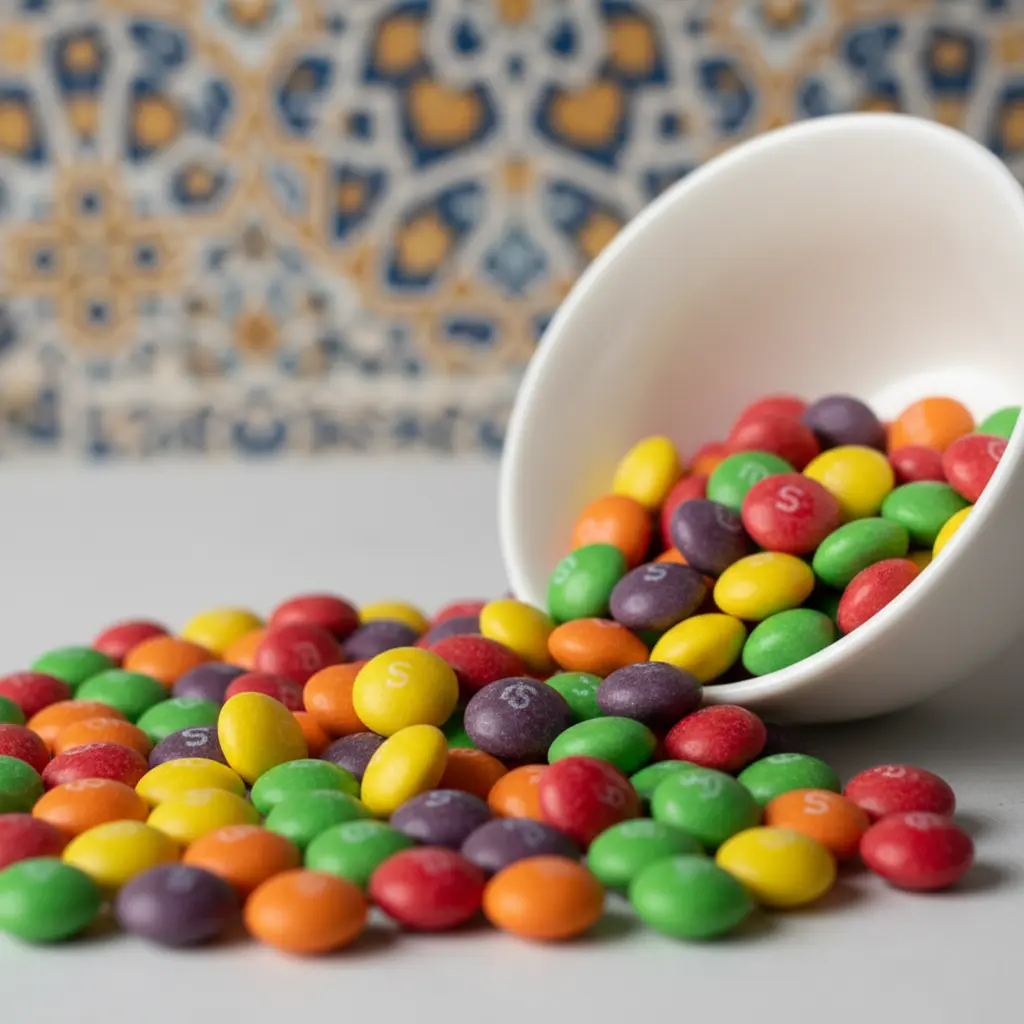
Are Skittles Halal? A Complete 2026 Guide for Muslim Consumers
If you’ve ever stood in a store aisle holding a colorful pack of Skittles and wondering, “Are Skittles halal?” — you’re not alone.
Skittles are one of the most popular candies in the world. With their fruity flavors, chewy texture, and bright rainbow colors, they appeal to kids and adults alike. But for Muslims who follow halal dietary guidelines, the real question goes beyond taste — it’s about ingredients, sourcing, and religious compliance.
In this comprehensive guide, we’ll break down everything you need to know about whether Skittles are halal, including ingredients, regional differences, gelatin concerns, sugar processing, and official certifications.
Understanding What “Halal” Means in Food
Before answering whether Skittles are halal, it’s important to understand what makes food halal in the first place.
“Halal” is an Arabic word meaning permissible under Islamic law. When it comes to food, halal guidelines prohibit:
- Pork and pork-derived ingredients
- Alcohol or intoxicants
- Animals not slaughtered according to Islamic law
- Cross-contamination with non-halal substances
For packaged foods like candy, common concerns usually involve:
- Gelatin (often derived from pork)
- Carmine (red dye made from insects)
- Alcohol-based flavorings
- Animal-derived emulsifiers
So where do Skittles stand?
Do Skittles Contain Gelatin?
One of the biggest concerns with candy is gelatin.
Many chewy candies — especially gummies — use gelatin as a binding agent. Since gelatin is commonly derived from pork, it is considered haram unless sourced from halal-certified animals.
The good news:
Modern Skittles do not contain gelatin.
Skittles used to contain gelatin many years ago, but the formula was changed. Today, Skittles use plant-based ingredients to achieve their chewy texture.
Instead of gelatin, Skittles typically use:
- Modified corn starch
- Tapioca dextrin
- Pectin (in some regions)
Because they are gelatin-free, Skittles are often considered vegetarian-friendly — which is a positive sign for halal-conscious consumers.
Skittles Ingredients: A Closer Look
To determine whether Skittles are halal, let’s analyze their common ingredients (U.S. version):
- Sugar
- Corn syrup
- Hydrogenated palm kernel oil
- Citric acid
- Tapioca dextrin
- Modified corn starch
- Natural and artificial flavors
- Colors (Red 40, Yellow 5, Yellow 6, Blue 1, etc.)
- Sodium citrate
- Carnauba wax
At first glance, none of these ingredients are explicitly haram. However, a few require deeper consideration.
Is the Sugar in Skittles Halal?
Sugar may seem harmless, but some refined sugar is processed using bone char (often derived from cattle bones). If the cattle are not slaughtered according to halal standards, some scholars question whether the sugar remains halal.
However:
- Bone char does not remain in the final sugar product.
- Many Islamic scholars consider refined sugar permissible.
- Some manufacturers now use alternative filtering methods.
Mars Wrigley (the company that produces Skittles) does not publicly specify its sugar processing method for all regions, but most halal certification bodies consider refined sugar permissible unless explicitly mixed with haram substances.
Do Skittles Contain Carmine?
Carmine (also called cochineal extract or E120) is a red coloring made from crushed insects. Some Islamic scholars consider it halal, while others consider it haram or doubtful (makruh).
The important point:
Skittles do not use carmine.
Instead, they use synthetic food dyes such as:
- Red 40
- Yellow 5
- Blue 1
These artificial colorings are generally considered halal.
Are Skittles Halal in the United States?
In the United States, Skittles:
- Do not contain gelatin
- Do not contain pork ingredients
- Do not contain carmine
- Do not list alcohol as an ingredient
However, they are not officially halal-certified in the U.S.
This means:
- There is no formal halal verification from a recognized halal authority.
- Some Muslims consider them permissible based on ingredient analysis.
- Others prefer to avoid products without certification.
So while Skittles in the U.S. appear halal by ingredient review, they are not formally certified halal.
Are Skittles Halal in the UK?
In the United Kingdom, Skittles are often labeled as suitable for vegetarians.
Additionally, some batches have been confirmed gelatin-free and free from animal-derived ingredients.
However, like in the U.S., Skittles in the UK typically do not carry official halal certification.
Muslims in the UK often consider them halal based on ingredients, but those seeking strict compliance may prefer certified alternatives.
Are Skittles Halal in Muslim-Majority Countries?
Here’s where things get interesting.
In some Muslim-majority countries, Skittles may carry halal certification, depending on local manufacturing and distribution.
For example:
- Skittles produced in certain regions of Asia or the Middle East may be halal-certified.
- Certification depends on local factories and ingredient sourcing.
If you live in a Muslim-majority country, check the packaging for an official halal logo from a recognized authority.
What About Alcohol in Skittles Flavoring?
Flavorings are another area of concern.
Some artificial or natural flavors use alcohol as a solvent during processing.
In most cases:
- The alcohol evaporates during manufacturing.
- The final product contains negligible or no detectable alcohol.
Many scholars permit such ingredients if no intoxicating effect remains.
Mars does not list alcohol as a direct ingredient in Skittles. However, because “natural flavors” are proprietary, full transparency is limited.
For strict halal observers, lack of clarity may be a concern.
Are All Skittles Flavors Halal?
Different Skittles varieties may contain slightly different ingredients.
Common varieties include:
- Original Skittles
- Sour Skittles
- Tropical Skittles
- Wild Berry Skittles
- Smoothies (limited editions)
Most standard varieties are gelatin-free.
However, limited edition or specialty versions may vary by country. Always check:
- Ingredient list
- Allergen warnings
- Halal certification logo
Why Aren’t Skittles Officially Halal Certified Everywhere?
There are several reasons:
- Certification costs money.
- Companies prioritize certification in Muslim-majority markets.
- Manufacturers may change suppliers frequently.
Obtaining halal certification requires auditing the entire supply chain, which large global companies may not pursue unless there is strong market demand.
Scholarly Opinions: Are Skittles Considered Halal?
Islamic scholars often evaluate packaged foods based on:
- Ingredient list
- Source of additives
- Manufacturing process
Because Skittles:
- Contain no gelatin
- Contain no pork derivatives
- Contain no carmine
Many scholars consider them halal or at least permissible (mubah).
However, conservative scholars may classify them as doubtful (mashbooh) due to:
- Unverified sugar processing
- Unspecified flavoring solvents
If you follow a stricter interpretation, you may prefer certified halal candy.
Halal Alternatives to Skittles
If you prefer guaranteed halal-certified options, here are alternatives:
- Halal-certified gummy candies
- Halal fruit chews
- Halal jelly beans
- Candies from brands with recognized halal logos
These products clearly state halal compliance and remove any uncertainty.
Are Skittles Vegan and Does That Mean Halal?
Skittles are generally considered vegan in many regions because they contain no animal-derived ingredients.
But remember:
Vegan does not automatically mean halal.
Vegan products can still contain alcohol-based flavorings or cross-contamination risks.
However, in the case of Skittles, their vegan status supports the argument that they are likely halal from an ingredient perspective.
Final Verdict: Are Skittles Halal?
Here’s the balanced conclusion:
- Skittles do not contain gelatin.
- Skittles do not contain pork derivatives.
- Skittles do not contain carmine.
- Most ingredients appear plant-based or synthetic.
- They are not universally halal-certified.
So, are Skittles halal?
In most Western countries, Skittles are considered halal by ingredient analysis but are not officially halal-certified.
If you strictly require certification, you may choose to avoid them unless the packaging carries a recognized halal logo.
If you rely on ingredient review and mainstream scholarly opinions, Skittles are generally considered permissible.
How to Check If Your Skittles Are Halal
To be completely sure:
- Read the ingredient label carefully.
- Look for a halal certification logo.
- Check the manufacturer’s website for updates.
- Contact Mars Wrigley directly if needed.
Manufacturing processes can change, so it’s always wise to verify.
Conclusion
The question “Are Skittles halal?” doesn’t have a simple yes-or-no answer for every country. However, based on current formulations, Skittles are gelatin-free and do not contain obvious haram ingredients.
For many Muslims, that makes them acceptable to eat. For others who require formal certification, they may remain in the “doubtful” category unless produced in a halal-certified facility.
As a conscious consumer, the best approach is to:
- Stay informed
- Read labels
- Follow your level of religious comfort
When in doubt, choose products with clear halal certification.
For more like this visit : Hilalinfohub
